REVIEW · ZADAR
Zadar Private Walking Tour With A Professional Guide
Book on Viator →Operated by Global Guide Services · Bookable on Viator
Zadar has more stories than you expect. This private walking tour is built around two things I really like: getting the Sea Organ and Sun Salutation explained in plain language, and having a guide connect what you’re seeing to the bigger turns in Zadar’s past, including World War I and II and when Croatia was part of the Socialist Federal Republic of Yugoslavia. It’s a great mix of visuals and context, without the group pace that makes you feel like a human bookmark.
You’ll also have one big advantage most tours don’t: a private guide just for your group, with room to tweak what you do on the day. One thing to plan for is that it is still a walking tour (about 2 hours), and some indoor sights can mean extra time and entrance fees you’ll pay separately.
In This Review
- Key things to love about this Zadar private walk
- Starting Point in Old Town: Why the walk plan works
- Sea Organ and Sun Salutation: the moment Zadar clicks
- St. Donat’s Church: the city’s most recognizable silhouette
- Cathedral of St. Anastasia: when religion becomes geography
- City gates and wall sections: learning Zadar’s shape
- 5 Wells Square: the simple, human center of town
- The famous city market area: taste the city’s everyday rhythm
- Customizing the day: ask your guide for your kind of Zadar
- Guides make the difference: Martina and Josip in the mix
- How the history fits together (without turning into a lecture)
- Entrance fees and what they mean for your budget
- What you’ll actually do during the two hours
- Price and value: $259.68 for up to 15 people
- Should you book this Zadar private walking tour?
- FAQ
- How long is the Zadar private walking tour?
- What is the price, and what group size does it cover?
- Is this tour private?
- Where does the tour start?
- Are entrance fees included?
- What tickets do you receive?
- Can I cancel for a full refund?
- Are service animals allowed?
Key things to love about this Zadar private walk
- Sea Organ and Sun Salutation: you’ll know what to look for before you take the photos
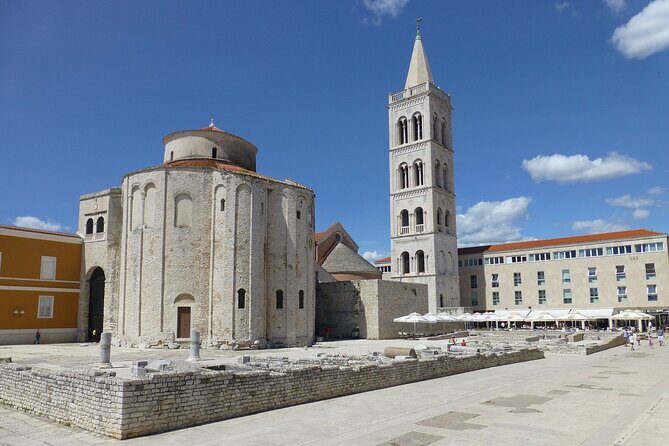
- Church of St. Donat and Cathedral of St. Anastasia: the guide ties details to why these buildings matter
- Gates and city wall sections: you get the layout, not just the landmarks
- Five Wells Square and the city market area: more local texture than a typical highlight-only route
- Customization on the spot: your guide can adjust your path based on your interests and time
Starting Point in Old Town: Why the walk plan works
Most of the magic in Zadar sits close together, but that doesn’t mean it’s simple to navigate on your own. This tour starts at Istarska obala (right by the 23000 Zadar area), then loops back to the same meeting point when you’re done. That matters because it keeps your morning stress low. Instead of turning your trip into a scavenger hunt, you’re following a logical route through the historic center.
The tour is set for about two hours, which is a sweet spot for people who want the highlights without spending half the day in transit. It also means your guide can stop, point, and explain at a natural pace. If you like learning as you go, this format is a good fit.
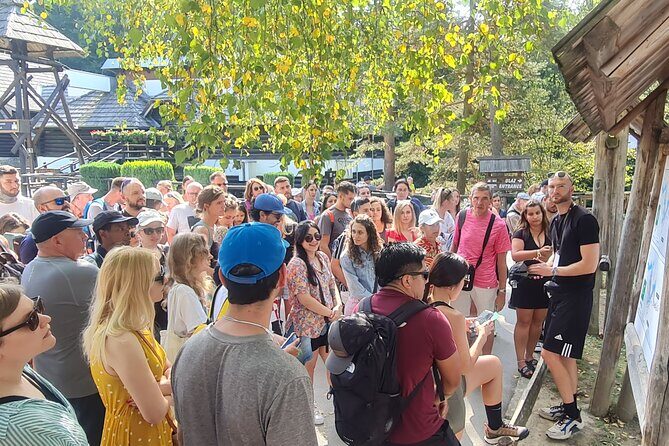
And yes, it’s a private tour. The group is limited (up to 15), so you avoid the awkward shuffle that happens on larger bus-style walking tours. You get real conversation time, and you can ask questions without feeling like you’re slowing everyone else down.
Other Zadar Old Town walking tours we've reviewed in Zadar


Sea Organ and Sun Salutation: the moment Zadar clicks
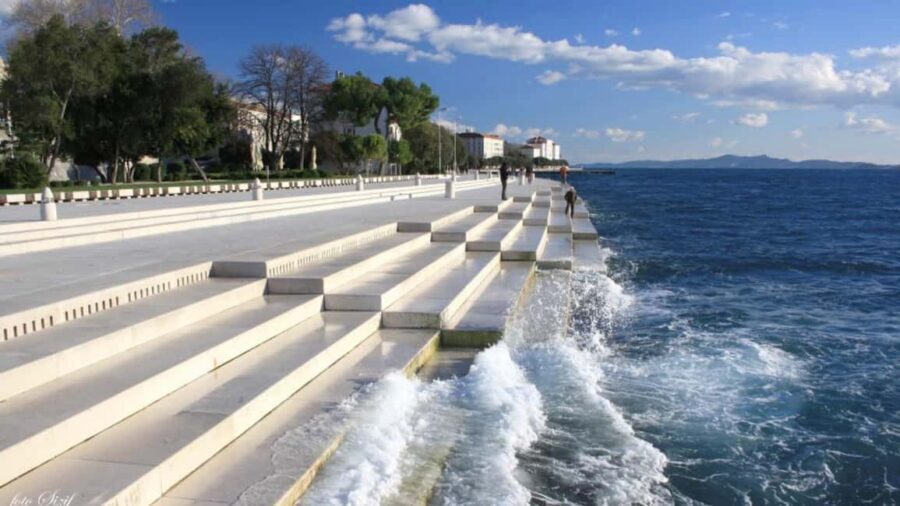
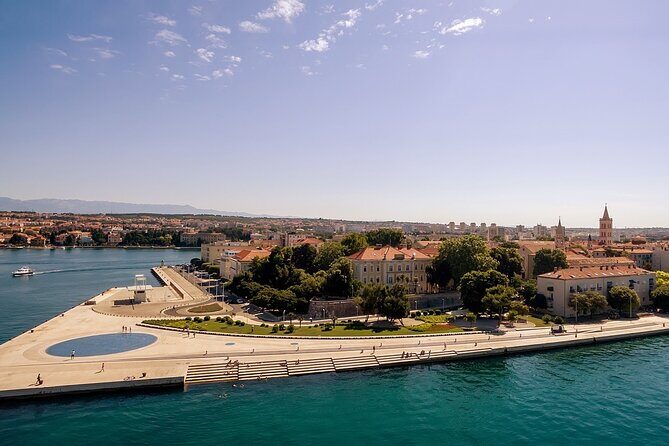
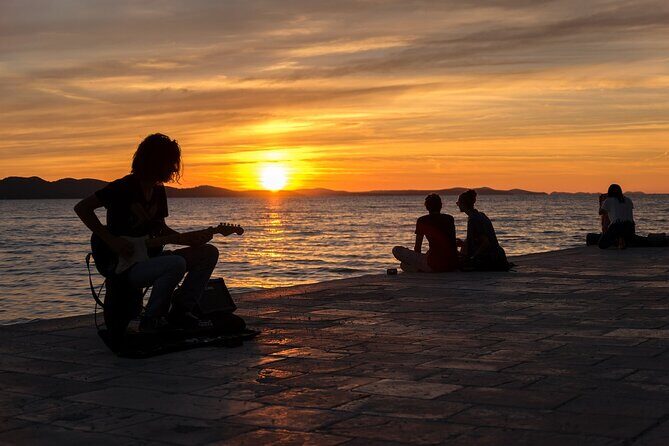
If you only did one thing in Zadar, it would probably be this stretch along the waterfront. The Sea Organ and the Sun Salutation are modern works, but they connect to the city in a way that feels surprisingly human: sound, light, and the sea are doing the storytelling.
Here’s what I think is key for you as a visitor: these aren’t just photo stops. A good guide helps you understand what you’re actually seeing, so you don’t leave thinking you collected a couple of Instagram frames. The Sea Organ, in particular, tends to confuse people until someone explains how it works and what makes the experience different from a normal viewpoint.
Then the Sun Salutation adds that extra layer—more than a sculpture, it’s an interactive way of watching the sky. Even if you’re not a science person, the explanations are straightforward and tied to why Zadar chose to build this here, not somewhere else.
Practical note: since you’re walking and the waterfront can be breezy, it’s worth bringing a light layer. You don’t want a windy coat problem to steal your focus.
St. Donat’s Church: the city’s most recognizable silhouette
Next up is the Church of St. Donat. This church is often the first building people recognize in Zadar, but the real value of a guided walk is what happens after the first glance.
With a professional guide, you get the story behind the architecture and the role this kind of landmark played in the life of the city. You also get a sense of time—how different eras left their marks, so the place doesn’t feel like a random set of old stones.
One of the best parts of private guiding is that you can adjust. If you’re into Romanesque-ish details, you’ll get more of that. If you just want the big picture, you’ll get it without a lecture. The guides on this tour are also willing to keep things conversational, which is a big deal when you’re spending two hours walking.
Cathedral of St. Anastasia: when religion becomes geography
From St. Donat you move toward the Cathedral of St. Anastasia. A cathedral can feel intimidating if you’re not sure where to look. The guide helps you see it as a piece of the city map, not just a stop to check off.
You’ll also get context on why the cathedral belongs in the same conversation as the rest of the historic center. Zadar’s story isn’t only about wars and politics; it’s also about what the city built for community life. The guide makes that connection so your photos stop being just pretty angles and start meaning something.
If you’re planning your day around this tour, consider doing it in the earlier part of your trip. After you’ve had the overview from a guide, the rest of Zadar starts clicking into place when you return later.
City gates and wall sections: learning Zadar’s shape

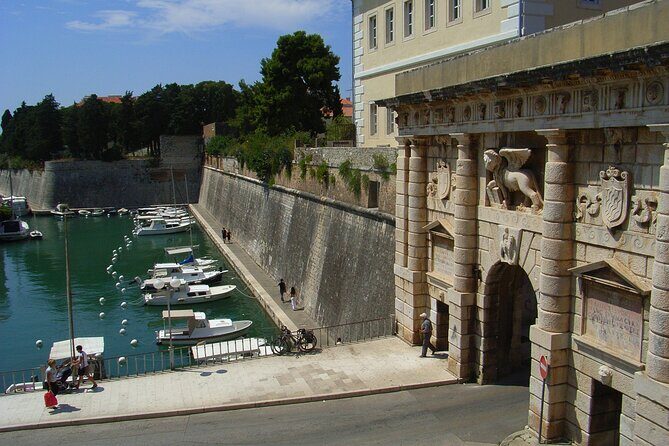
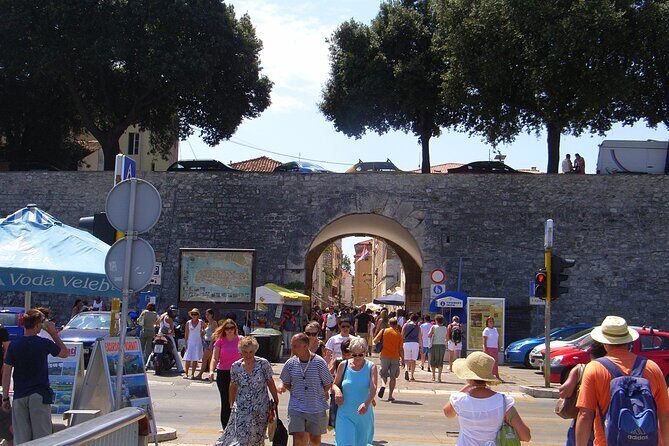
A standout part of this walking tour is that it doesn’t treat Zadar as a set of isolated monuments. You get Sea Gate and Land Gate, plus City Wall viewpoints and relevant stretches along the defenses.
This is where a guide quietly earns their fee. When you’re walking, it’s hard to understand how protection worked unless you see the layout. Gates and walls teach you the city’s shape—what was important enough to protect and where the pressure points were.
Even if you’re not a military-history person, you’ll still enjoy this segment because it’s visual. You see how the city “fits” together, and you get better at reading the streets afterward. That means less time wandering later and more time enjoying.
Also, walking along or near wall lines tends to give you small perspective breaks—good for photos and for catching your breath.
Other walking tours we've reviewed in Zadar






5 Wells Square: the simple, human center of town
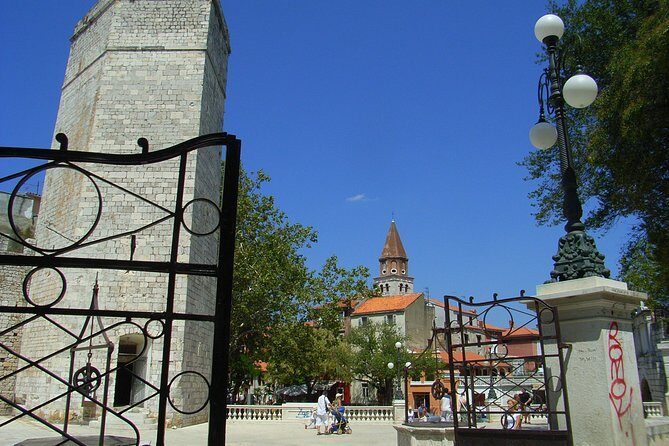
5 Wells Square might not be the headline name like St. Donat, but it’s exactly the kind of stop that makes a walk tour feel like a walk tour. It’s a public space where you can slow down for a minute and absorb how people move through the historic center.
A guide helps you see what makes this space practical, not just pretty. When you understand why it’s here and how it relates to daily life, the city feels less like a museum and more like somewhere people actually lived.
I like these moments because they break up the “big monument” pressure. After gates, walls, and major churches, a square like this gives you a reset.
The famous city market area: taste the city’s everyday rhythm
This tour also includes time around the famous city market. Even if you don’t plan to buy much, the market is where you feel the local rhythm. It’s usually noisy, colorful, and more immediate than the quiet stone stops.
A guide makes a market visit smarter because they can point out what’s worth paying attention to without you needing to research every stall beforehand. You also learn how to navigate without getting turned around.
One drawback to keep in mind: markets can be busy and change day by day. If you’re booking this as your only planned stop, have the mindset that this is part orientation, part vibe. If you want a deeper food-focused experience, you can use this tour as your “map,” then return later on your own with a clearer idea of what interests you most.
Customizing the day: ask your guide for your kind of Zadar
This tour is built with flexibility. The guide can customize on the spot, which is where private tours really separate from fixed “checklist” walks.
I love this part because Zadar isn’t one-trick. If your interests lean toward arts and crafts, it can turn into more than a monuments tour. One guide named Josip is mentioned for taking people through a glass museum and arranging the last glass-blowing demo of the day. That’s the kind of small, timed detail that is nearly impossible to do solo.
If you’re booking, come with two or three interest points you want to squeeze in. Examples you can mention: architecture focus, waterfront focus, or an arts-and-crafts add-on if time allows. With private guiding, you’re not locked into a rigid script.
And if you’re on a tight schedule, flexibility is also your friend. You can decide what to linger over and what to speed past.
Guides make the difference: Martina and Josip in the mix
The quality of this experience is tightly linked to the people leading it. Two names show up in excellent feedback: Martina and Josip.
Martina is described as friendly and able to keep attention for the full tour—meaning you don’t get long pauses where you’re left trying to interpret stonework yourself. She’s also praised for helping people understand the significance of the sites to Zadar’s history, which is exactly what you want from a walking guide.
Josip stands out for adding an extra layer with glass-focused stops and making it work with the timing of a demo. That’s a reminder that a private guide isn’t just reciting facts—they can help you get better access to what’s going on that day.
Even if you don’t meet these exact guides, the pattern is clear: the tour is designed for interaction, not just background talking.
How the history fits together (without turning into a lecture)
This walking tour doesn’t stay in the past “as decoration.” It connects the visible landmarks to major historical periods, including World War I and II, and the era when Croatia was part of the Socialist Federal Republic of Yugoslavia.
Why that matters for you: without context, Zadar can feel like a set of impressive buildings. With context, you start noticing why each part of the city layout exists—why certain places were protected, how religious landmarks shaped community life, and why the waterfront experience has its own identity.
The best guides do this lightly. You walk, you look, you ask questions, and suddenly the city stops being vague. It becomes a story you can follow with your feet.
Entrance fees and what they mean for your budget
One practical point: entrance fees are not included. That means your total day cost depends on what you choose to enter versus what you view from outside.
To keep value high, I suggest using the guide to decide quickly what’s worth it for you. If a building’s interior is important to your interests, ask about whether you should add it. If you’d rather spend time enjoying the exterior views and streets, you can do that too.
Since the core walk includes major landmarks, you’re not paying extra just to see the basics. You’re paying for interpretation, timing, and the fact that you won’t get lost.
What you’ll actually do during the two hours
Here’s the “flow” you can expect, in human terms:
- You start along the waterfront area and ease into the key coastal landmarks first, including the Sea Organ and Sun Salutation.
- You shift into the historic center, where St. Donat sets the architectural tone.
- You continue to St. Anastasia Cathedral, then move outward and up to the city’s protective layer with Sea Gate, Land Gate, and City Wall.
- You finish the walk with lived-in spaces like 5 Wells Square and the city market area.
The benefit of this sequence is clarity. You begin with “wow” visuals, then learn why the city is laid out the way it is, then end somewhere you can feel the daily pulse.
If you’re the kind of person who likes momentum, this route keeps you moving. If you’re slower, tell your guide at the start. Private guiding is built for small adjustments.
Price and value: $259.68 for up to 15 people
At $259.68 per group (up to 15), the value depends on who’s in your group.
If you’re traveling solo or as a couple, you’re paying for privacy rather than splitting costs with strangers. In that case, I think it’s worth it if you want a guided explanation of Zadar’s layout and history in a short time window—especially if you’re skipping a bus tour.
If you have a small group of friends or family, the per-person cost drops fast. Then the math starts looking better because you get private guiding without the “small tour” price penalty that some companies charge.
Also keep in mind what you’re not paying for: entrance fees aren’t included. So if you plan multiple interior entries, your budget should reflect that. For many people, though, the exterior landmarks plus the guided context feel like the best use of money.
Should you book this Zadar private walking tour?
Book it if you want Zadar to make sense quickly. This is a smart choice for your first day in town, for travelers who like conversation, and for anyone who hates the feeling of being herded around.
I’d also book it if you want a guide to connect the dots—waterfront landmarks, major churches, city gates and walls, and everyday spaces like 5 Wells Square and the market—into one coherent walking story. And if your group enjoys flexibility, the ability to customize on the spot can turn this into something slightly different each time.
Skip it only if you’re truly happy reading on your own and you don’t care about history context. If you want a guide mainly for navigation, you could do it independently—but you’d lose the easy explanations that make Zadar’s highlights land.
FAQ
How long is the Zadar private walking tour?
The tour lasts about 2 hours.
What is the price, and what group size does it cover?
It costs $259.68 per group and can include up to 15 people.
Is this tour private?
Yes. It’s a private tour/activity, and only your group participates.
Where does the tour start?
The meeting point is Istarska obala, 23000, Zadar, Croatia.
Are entrance fees included?
No. Entrance fees are not included.
What tickets do you receive?
You get a mobile ticket.
Can I cancel for a full refund?
Yes. You can cancel for a full refund if you cancel at least 24 hours in advance.
Are service animals allowed?
Yes, service animals are allowed.