REVIEW · ZADAR
Zadar: Virtual Reality Guided History Walking Tour
Book on GetYourGuide →Operated by Magic Croatia trips and tours · Bookable on GetYourGuide
Time travel in Zadar comes with a headset. This 2-hour VR guided history walking tour blends a friendly in-person assistant with 360° scenes, 3D objects, animations, sound effects, and an audio guide in 7 languages—so the city’s past feels like it’s happening around you, not in your imagination.
I like the way it turns key landmarks into story moments, especially the recreated Roman Forum as the social and economic hub of ancient Zadar. I also like that you get a stand-out access moment at St. Chrysogonus’ Church, which is otherwise closed to the public, plus time jumps that cover the 4th Crusade, the 1202 invasion from the sea, and WWII attacks from air and sea.
One possible drawback: the VR visuals rely on an OculusGo-style all-in-one setup, and if you’re picky about picture sharpness or the hardware acts up, you may need extra patience—and the assistant is your safety net.
In This Review
- Key things to know before you go
- Starting at Sea Gate: getting oriented in Zadar old town
- VR glasses that do the heavy lifting: how the experience really works
- The Roman Forum stop: the ancient city’s daily engine
- St. Chrysogonus’ Church: a rare interior you don’t usually get
- 1202 from the sea: seeing the invasion coming
- WWII attacks from air and sea: perspective you can’t get from street level
- Hot-air balloon views and the city after WWII
- Price and value: is $35 reasonable for 2 hours of VR walking?
- Language, guide style, and what to do if VR feels weird
- Who this tour suits best (and who might want a different plan)
- Should you book this Zadar VR history walking tour?
- FAQ
- How long is the Zadar VR guided history walking tour?
- Where is the meeting point in Zadar?
- What VR equipment is used?
- What languages are available for the audio guide?
- Is the tour wheelchair accessible?
- What do I need to bring with me?
- Is food and drink included?
- What is the cancellation policy?
Key things to know before you go
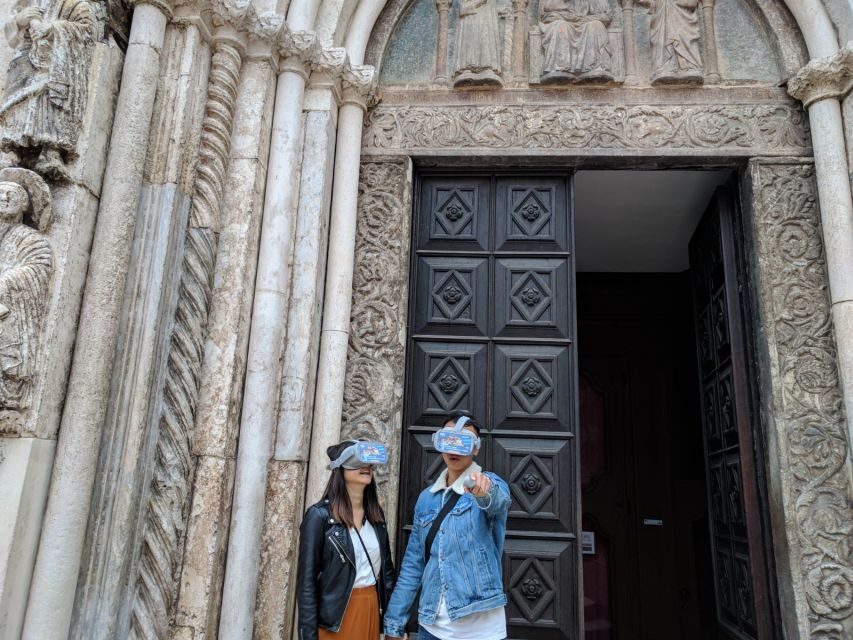
- 360° VR scenes tied to real spots in Zadar old town, so you’re not just watching on a screen
- Roman Forum reconstruction lets you understand what the ancient city actually revolved around
- St. Chrysogonus’ Church stop is a rare, otherwise-closed experience
- 1202 sea attack + WWII from above gives perspective on how the city changed under pressure
- Audio guide in 7 languages (Croatian, English, Esperanto, French, German, Italian, Spanish)
- Simple controls and an assistant help you keep moving even if VR feels new
Starting at Sea Gate: getting oriented in Zadar old town
The tour begins at a souvenir shop in a red building right next to the Sea Gate (Poljana Pape Aleksandra III 7). It’s a smart starting point because Sea Gate is already a natural “front door” to the old city. Within minutes, you’ll be in the right pocket of Zadar where the walking feels easy and the VR moments actually match what you see outside the headset.
This is not one of those tours where you spend half the time figuring out where the next stop is. You’ll have a tour assistant with you the whole way, guiding you to the correct spots and helping you line up the timing for each VR “chapter.” If you’ve ever found that VR tours can feel disconnected from the street in front of you, this one is built to prevent that.
Expect a smooth pace: you’ll move between key points, then put on the headset when it’s time to time-travel. The headset experience is guided enough that you don’t need to be tech-savvy, and the interface lets you choose when to go to the next point.
Other Zadar Old Town walking tours we've reviewed in Zadar


VR glasses that do the heavy lifting: how the experience really works
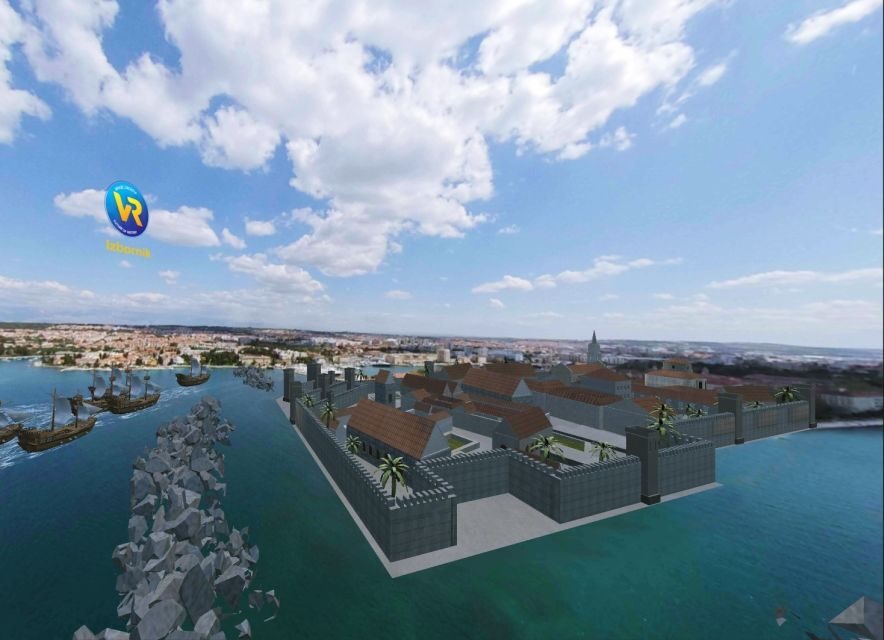
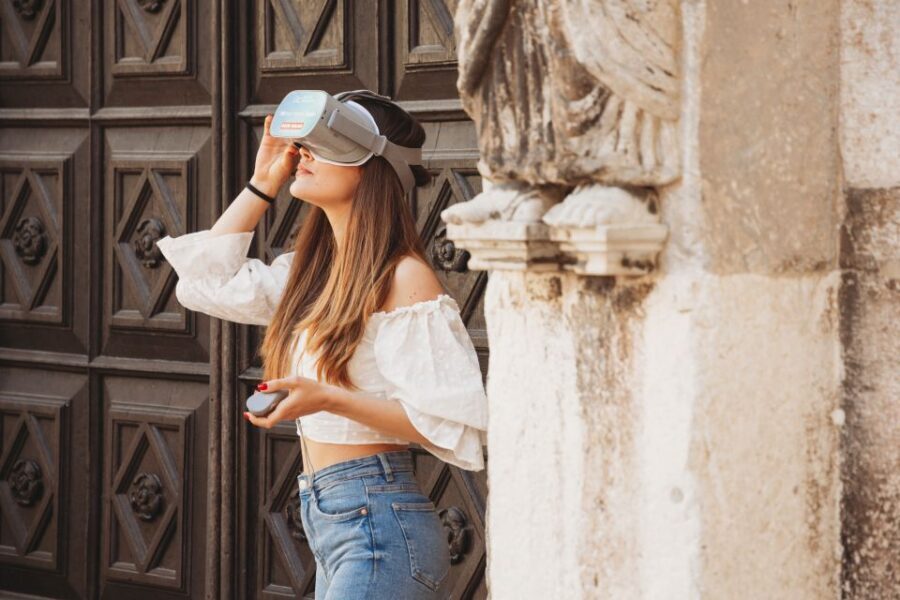
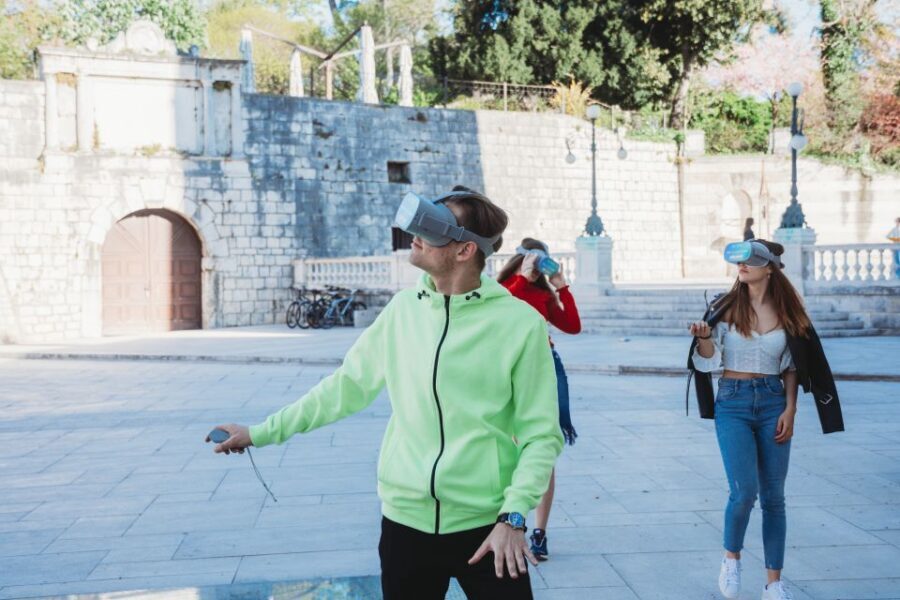
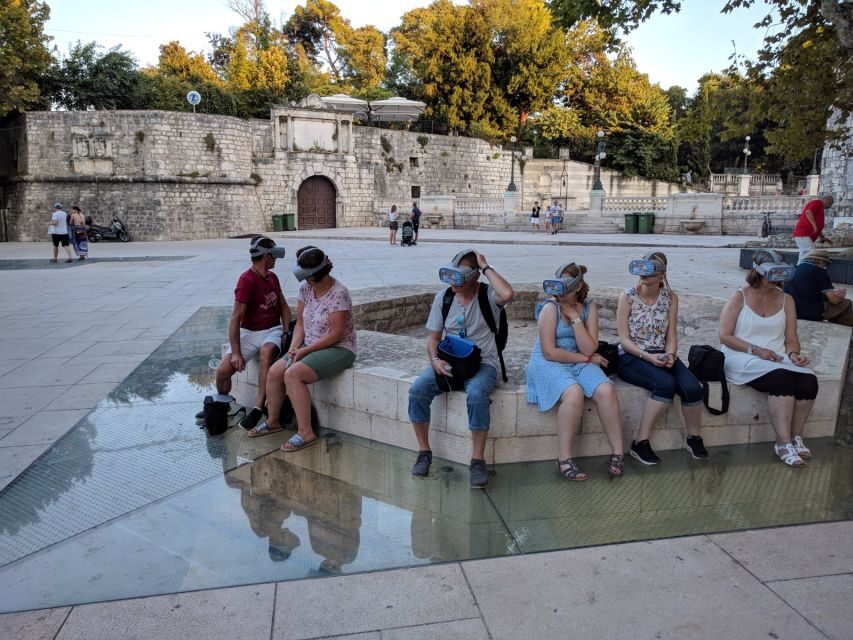
You’ll use OculusGo All-in-One VR glasses with a controller. The headset is paired with a guided audio track translated into 7 languages, and the assistant is there in case you need help. That matters more than you might think, because VR tours live or die on friction. Here, the friction is reduced by simple controls and human support.
The tour’s VR layer isn’t just 360° “look around.” It includes 3D objects, animations, and sound effects that give your brain cues for what’s important. That makes the historical content easier to follow, especially for topics that can get abstract—like crusading-era priorities, invasion routes, or how modern-looking streets sit on top of older layouts.
One practical tip: if the headset feels awkward at first, don’t push through silently. Let the assistant help you get set comfortably. The tour is built to continue smoothly, but the fastest way to enjoy it is to handle the gear quickly.
The Roman Forum stop: the ancient city’s daily engine

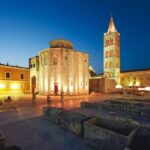
A highlight here is standing in the area of the former Roman Forum. This isn’t treated like a vague “Roman ruins moment.” You’re given context for why the Forum mattered: it was the center of social and economic life in ancient Zadar.
What I like about this kind of stop is that it teaches you to look at space like people did back then. Instead of memorizing dates, you start to understand flow: where people would gather, where commerce and social life would spill outward, and how the city’s power concentrated in one spot.
In the VR segment tied to this location, you’ll see recreated historical visuals connected to major eras, including the 4th Crusade. The point isn’t to turn this into a lecture—it’s to make you feel the stakes and the atmosphere of the period you’re viewing. When you get the audio plus the VR viewpoint aligned with a real location, you tend to remember it better later, too.
St. Chrysogonus’ Church: a rare interior you don’t usually get
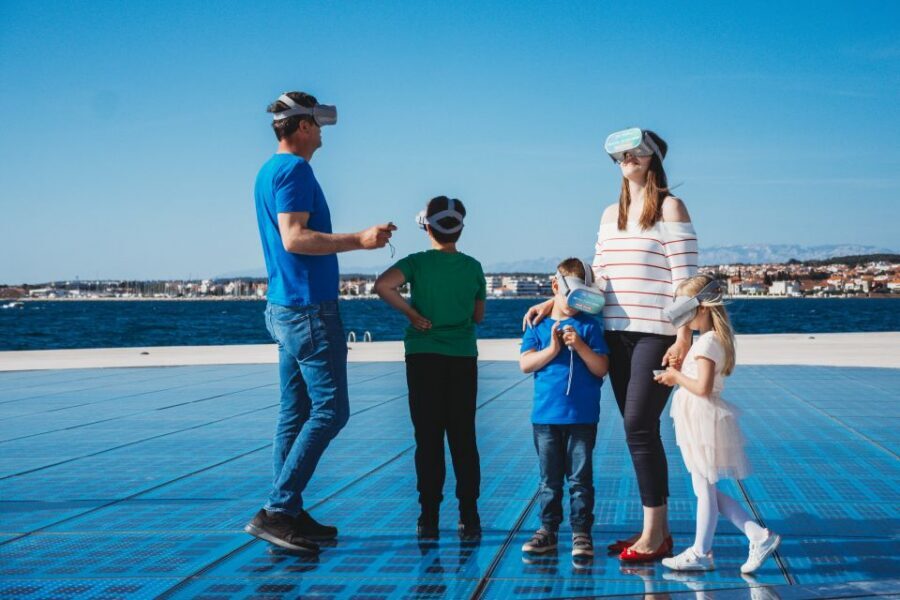
St. Chrysogonus’ Church is normally closed to the public, but this tour includes a stop there. Even if you’re not a hardcore architecture person, a usually-closed church is worth your attention because it changes what “old town history” can mean. You’re not only looking outward—you’re getting a specific interior experience that you can’t easily reproduce on your own.
I find these moments valuable because they turn “tourist sightseeing” into a more respectful, place-specific encounter. You’re learning the city’s story with the actual building involved, not just imagining it.
The VR doesn’t replace being in the church. It supports it. Think of it as a time-switch rather than a full takeover. If you’re the type who likes your history hands-on—standing in front of the place where something happened—you’ll probably enjoy this stop a lot.
1202 from the sea: seeing the invasion coming
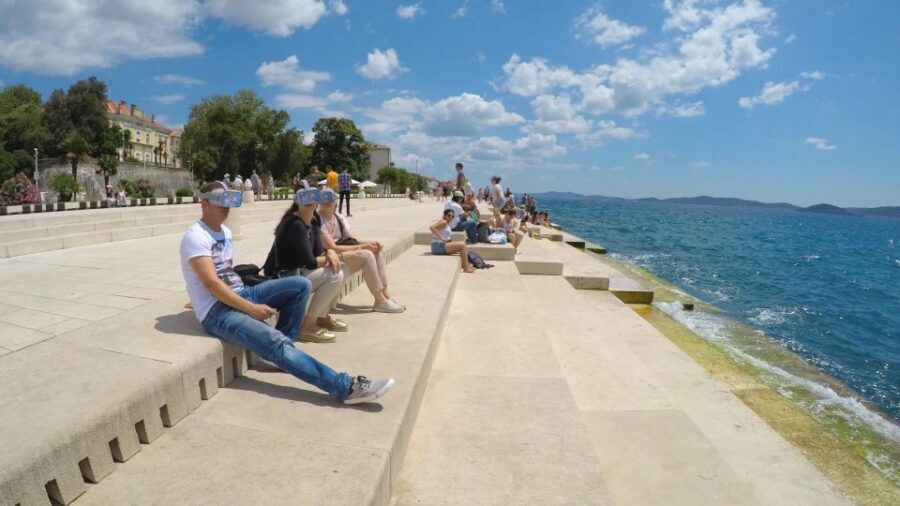
One of the more dramatic segments is tied to the 1202 invasion coming from the sea, linked to the 4th Crusade period. Instead of reading about an approaching threat, you experience it through VR with 360° visuals and sound effects. It’s the kind of staging that helps you understand scale and direction.
This is also where the audio guidance earns its keep. When a VR scene has movement but no context, it can feel like a video game. Here, the narration helps you connect what you’re seeing to what you’re standing near and what it meant for the city.
There’s a simple but important takeaway for you: this tour doesn’t just tell you that invasions happened. It helps you picture how an event like that reaches a coastline and forces the city to react.
Other virtual reality history walks we've reviewed in Zadar

WWII attacks from air and sea: perspective you can’t get from street level
The tour jumps forward to WWII, including attacks from the air and the sea. This is one of those “history is heavy” sections, but it’s handled in a way that stays focused on what you’re viewing and why it matters to Zadar’s story.
The value here is perspective. Street-level history in a coastal city can feel flat—you see buildings and streets, but you don’t naturally see the threat approaching. VR gives you a vantage point, letting you connect Zadar’s location on the Adriatic with the realities of wartime targeting.
And because you’re paired with an assistant, you’re not just dropped into a scary scene with no explanation. The tour is set up to keep you oriented and moving, even when the subject matter gets intense.
Hot-air balloon views and the city after WWII
Later, the tour adds an aerial-style view—described as looking at Zadar’s peninsula—and then includes a perspective after WWII. You’ll also experience an old-town view from a hot-air balloon view, which is a clever way to show how the city fits together when you step back from one street or one viewpoint.
These aerial segments are useful because they help you stop thinking of Zadar as isolated sights. The city becomes geography: a peninsula, a coastline, and a set of connections between neighborhoods and historical centers.
If you like tours that help you build a mental map fast, this is one of the better ways to do it in Zadar. You’ll come away with a clearer sense of how today’s streets connect to the past layouts you saw earlier in the tour.
Price and value: is $35 reasonable for 2 hours of VR walking?
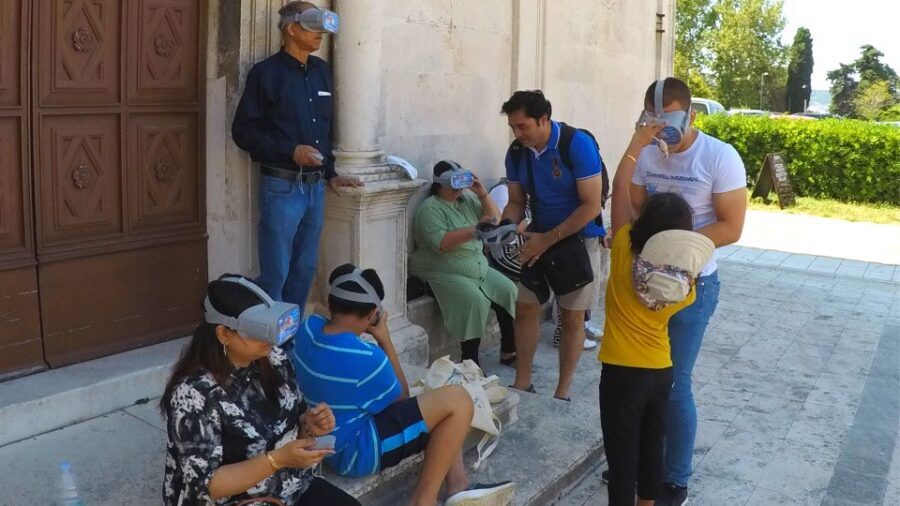
At about $35 per person for a 2-hour experience, the value depends on what you want from Zadar.
If you’re the type who enjoys history but hates long lectures, the payoff is strong. You’re getting:
- a walking tour component (so you’re seeing the old town in real life)
- VR recreation using 360° views, 3D objects, animations, and sound effects
- an audio guide in 7 languages (Croatian, English, Esperanto, French, German, Italian, Spanish)
- a tour assistant who stays with you and helps with the VR experience
That combination is what justifies the price. It’s not just a headset rental; you’re paying for guided sequencing—VR scenes tied to specific places—and for translation coverage.
If you’re extremely sensitive to image quality or you’re expecting “2025 phone screen” sharpness, keep your expectations grounded. The hardware is more basic than modern high-end VR, and some people may need more help to get everything working smoothly. The assistant presence reduces the risk, but it’s still something to consider.
Language, guide style, and what to do if VR feels weird
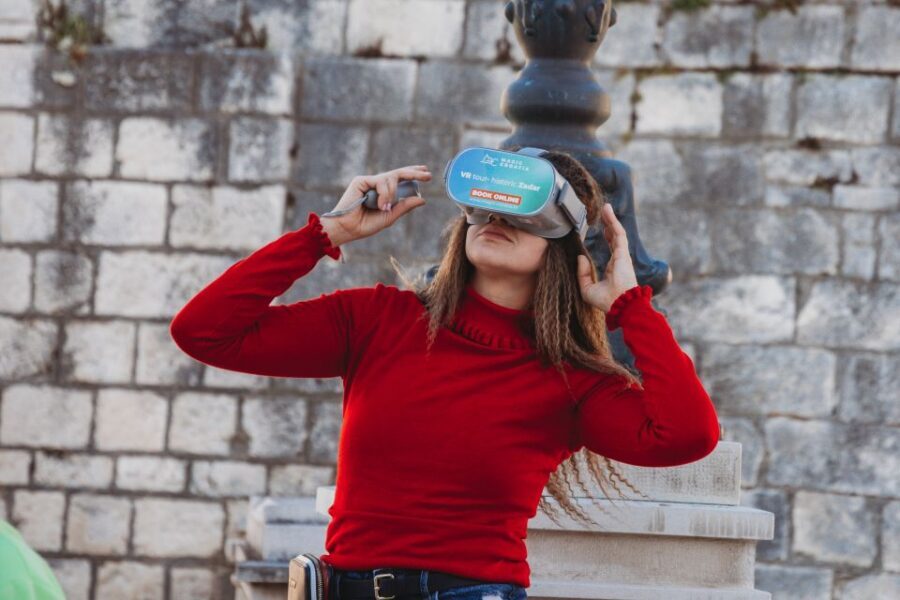
The audio guide is translated into 7 languages, and the instructor is listed as English. That means you should be able to follow even if your Croatian is basic to nonexistent.
Guide style seems to matter here. In one instance, the guide named Veronica was praised for delivering information that’s enough and not overwhelming. That matches the format well: short, targeted explanations so the VR moments don’t become background noise.
If you’re worried about understanding everything: you don’t need to be. You’ll have guided audio plus a real person helping you move between points. You’ll also control the pace when it’s time for the next point, which helps if you want an extra second to orient yourself.
Who this tour suits best (and who might want a different plan)
This tour is a great fit if you:
- want Zadar old town history but learn better with visuals than with long talking
- like unusual access, like stepping into St. Chrysogonus’ Church when it’s usually closed
- enjoy dramatic historical storytelling, from Crusades to WWII
- want a guided way to understand how places connect (Roman Forum, market area, coastline, aerial views)
It’s less ideal if you:
- hate any chance of tech glitches and don’t want to rely on an assistant for headset setup
- strongly prefer high-definition visuals and are quick to judge older VR hardware
Should you book this Zadar VR history walking tour?
Book it if you want a fun, guided way to understand how Zadar evolved—from ancient civic life at the Roman Forum to invasion-era tension and WWII from air and sea—without feeling stuck in a museum lecture. The mix of real walking plus VR time-jumps is the core value, and the assistant support helps keep it from feeling frustrating.
Skip it or consider another option if VR hardware quality would make you unhappy. The experience depends on the headset working smoothly, and the visuals may feel behind modern expectations. If that doesn’t bother you, this is one of the more memorable ways to see Zadar’s story in a short window.
FAQ
How long is the Zadar VR guided history walking tour?
The tour duration is 2 hours.
Where is the meeting point in Zadar?
Meet at a souvenir shop in a red building next to the Sea Gate at Poljana Pape Aleksandra III 7, 23000 Zadar, Croatia.
What VR equipment is used?
You’ll use OculusGo All-in-One VR glasses with a controller.
What languages are available for the audio guide?
The audio guide is translated into Croatian, English, Esperanto, French, German, Italian, and Spanish. The instructor is listed as English.
Is the tour wheelchair accessible?
Yes, it is listed as wheelchair accessible.
What do I need to bring with me?
Bring a passport or ID card.
Is food and drink included?
No, food and drinks are not included.
What is the cancellation policy?
Free cancellation is available up to 24 hours in advance for a full refund.