REVIEW · ZADAR
Zadar Guided Tour with Virtual Reality Experience
Book on Viator →Operated by Magic Croatia: Trips and Tours · Bookable on Viator
Zadar can feel small at street level, then huge in VR. This guided walk threads Roman, medieval, and war-era sights together with included headset time at the key stops. I like that the route ends at the Sea Organ, so the trip finishes with one of Zadar’s modern landmarks instead of petering out in the old town.
Two things I especially like: you get a real guide talking you through the sites, not just a tech add-on, and the VR is built around places that are usually closed or easy to miss. One drawback to keep in mind is that the VR quality isn’t equally detailed everywhere—at some stops it can feel more like a viewpoint than a full simulation.
In This Review
- Key things to know before you go
- Price, timing, and what 2 hours really covers
- Meeting point to Sea Organ: how the route is laid out
- Stop by stop: churches, relics, and Roman gates with VR
- Church of St. Krševan (Chrysogonus) and the hidden monastery mood
- St. Simon’s Church and the relic chest centerpiece
- Five Wells and the logic of Zadar’s gates
- The Forum, the Bell Tower, and WWII in virtual view
- The Roman Forum: air views, recreated streets, and a center-stage moment
- Bell Tower VR: Zadar as a target, not just a postcard
- Cathedral of St. Anastasia: VR access to places usually closed
- Paseo Maritimo and the old market: WWII’s impact along the waterfront
- Sea Organ and Greeting to the Sun: ending with a modern landmark and a crusader story
- How good is the virtual reality, really?
- Who this tour fits best (and who might prefer something else)
- Quick value check: is $36.04 worth it?
- Should you book this Zadar VR guided tour?
- FAQ
- What’s the duration of the Zadar guided tour with VR?
- What does the tour include?
- Is the tour offered in English?
- Where does the tour start and end?
- Are there admission fees for the stops?
- What group size should I expect?
Key things to know before you go
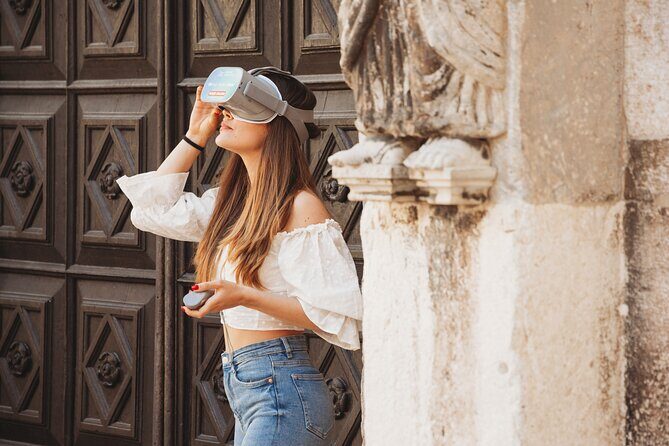
- Included VR headsets at multiple historic stops, not just one demo moment
- A guided walking route that connects separate landmarks into one storyline
- Churches and interiors where the VR can show areas that are often off-limits
- WWII and Crusader eras are shown in virtual scenes tied to real locations
- Small group size (up to 25) makes it easier to hear your guide clearly
- Free admission is listed for each stop, so you’re not hit with extra entry fees
Price, timing, and what 2 hours really covers
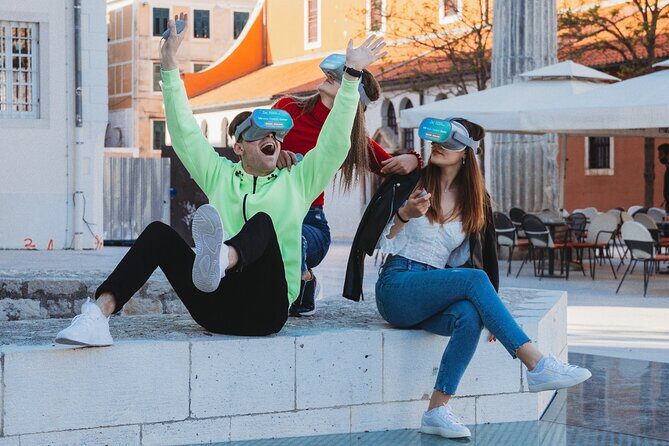
For $36.04 per person, you’re buying two hours of guided walking plus VR headsets at several stops across Zadar’s old town and waterfront. That price can feel very reasonable because each location you visit has its own historical angle, and the tour isn’t trying to squeeze in dozens of unrelated sights.
The tour runs about 2 hours (starting at 10:00 am) and uses a start-to-finish route rather than looping back to the same plaza. There’s also free cancellation up to 24 hours in advance if your plans shift.
Other virtual reality history walks we've reviewed in Zadar

Meeting point to Sea Organ: how the route is laid out
You begin at Magic Croatia – Travel Agency, Poljana Pape Aleksandra III 7, in central Zadar. The walk ends on the sea promenade at the Sea Organ (Obala kralja Petra Krešimira IV), so you finish right where Zadar’s waterfront begins to change from old-stone streets into views over the Adriatic.
Because the tour is paced for headsets and quick stops, plan for short waits at each location. Most of the itinerary segments are about 10–15 minutes, which means you’ll get the idea fast, then move on before you get bored.
Stop by stop: churches, relics, and Roman gates with VR

This tour is strongest when it turns “important but overlooked” buildings into something you can actually picture.
Church of St. Krševan (Chrysogonus) and the hidden monastery mood
The first stop is the Church of St. Krševan, a monastery church built in 1175 by male Benedictines. Even if the outside looks carefully preserved, the real hook is that it’s often closed to the public, so the VR gives you access to spaces you’d normally only see from the outside.
I like how the stop is framed: the tour treats it as Romanesque architecture you can read, not just a quick photo stop. If you’re the kind of traveler who enjoys architecture details, this is a good opener because it sets the tone for the rest of the walk.
St. Simon’s Church and the relic chest centerpiece
Next comes St. Simon’s Church (St. Simeon). You’ll see the interior and the standout feature described as the city’s biggest treasure: a silver pleated Gothic chest that holds relics of St. Simeon, still a patron saint in local life.
If you like religious art that’s more object-centered than sermon-centered, this part is likely your favorite kind of stop. It’s short, but it has a very specific “look at this” focal point.
Other guided tours in Zadar





Five Wells and the logic of Zadar’s gates
At Five Wells, you get a chance to understand how Zadar’s defenses and entrances worked over time. This section focuses on Roman gates that led into the antique city, then shifts to the medieval entrance and how later Venetian walls fit into the bigger timeline.
This stop works well for first-time visitors because it answers a basic question: why the old town feels like a maze. Even if you don’t memorize every term, you’ll walk away with a mental map of where people entered and how power changed hands.
The Forum, the Bell Tower, and WWII in virtual view
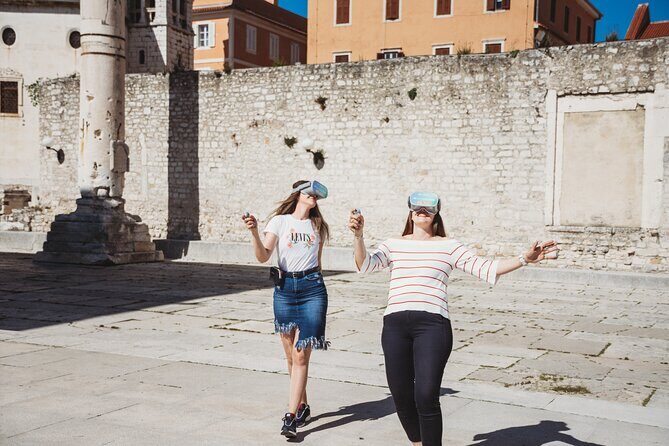
The middle of the tour is where the VR component becomes more than scenery. The tour doesn’t just show artifacts; it tries to make you stand inside the past.
The Roman Forum: air views, recreated streets, and a center-stage moment
The Forum stop begins with the remains of Zadar’s Roman Forum—described as the largest in Croatia—built from the 1st to 3rd centuries. Then the VR moves up and out: you see the Forum’s construction from above, like a hot-air balloon view, and you get audio guidance to keep the visuals from feeling random.
After that, you take off the headset and you’re placed back into the ruins with a recreated sense of what stood there. You’ll be taken to the center of the Forum surrounded by recreated buildings and statues, and the tour ends with a temple area dedicated to Jupiter, Juno, and Minerva dating from the 1st century BC.
One detail I really like here is the emphasis on what’s still in place after 2,000 years. That turns the experience from a “wow moment” into something you can look for when you’re wandering afterward.
Bell Tower VR: Zadar as a target, not just a postcard
From the Forum, the tour heads into a much heavier scene at the Bell Tower. Here, the VR shows Zadar’s old town from a high viewpoint, as if you’re standing at the top of St. Anastasia’s bell tower, with a WWII bombing sequence.
You see buildings burning and being hit, and you also get a map showing heavily damaged city areas that no longer exist today. This is the kind of stop that can stick with you, so it helps that it’s fairly short. You get the story, then you move on while the scene is still clear.
Cathedral of St. Anastasia: VR access to places usually closed
No visit to Zadar’s core is complete without St. Anastasia’s Cathedral. It’s dated to the 12th and 13th centuries and is described as the largest cathedral in the Dalmatia region.
St. Anastasia is Zadar’s city protector, and her relics are inside the cathedral. What makes this stop part of the VR concept is access: the virtual component lets you visit the cathedral and also look at the baptistery and sacristy, areas that are typically closed to the public.
This is a great match if you like religious spaces but don’t always want to rely on opening hours or crowd timing. Even when you can’t see certain rooms in person, the VR gives you a pathway into the layout and what’s worth noticing.
Paseo Maritimo and the old market: WWII’s impact along the waterfront
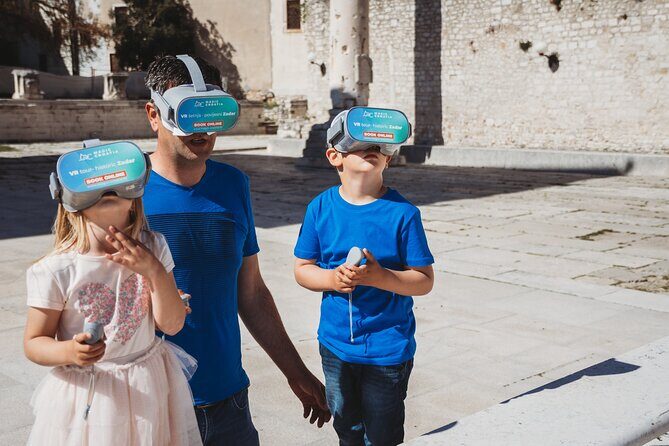
After the cathedral, the tour moves toward the Paseo Maritimo (the sea promenade) for a stop that’s easy to overlook if you only think of Zadar as scenery.
This section focuses on the former city market where people sold fish, vegetables, fruits, and other goods. The tour explains that the old market was destroyed during WWII, and the virtual scene helps you visualize what’s missing now—like residential buildings and a post office that no longer exist.
One more VR layer is included here: you’ll see the idea of airplanes dropping bombs on the city. It’s a sobering chapter, and the fact that it’s tied to a place you can stand in today makes it feel less like a lecture and more like history you can locate.
Sea Organ and Greeting to the Sun: ending with a modern landmark and a crusader story
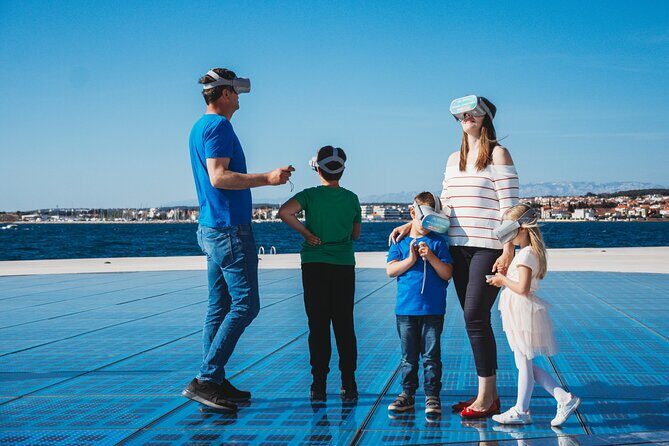
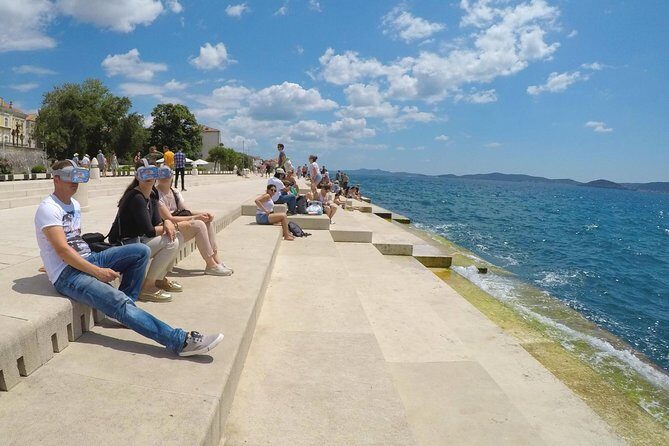
The walk finishes at the Sea Organ on the promenade, a structure built in 2005. Even if you’ve heard of it before, this is a nice ending because it contrasts modern Zadar with the centuries of change you’ve just walked through.
In the VR portion at this stop, you’ll see what the location looked like centuries ago—described here as the 13th century—when crusaders attacked Zadar from the sea. Again, the tour uses a viewpoint style that resembles standing in a hot-air balloon looking out over the water, then adds story audio.
I like this ending because it doesn’t leave you with only ruins. You end with a living piece of Zadar you can photograph and revisit later, and you’ll understand why the sea-front area matters across eras.
How good is the virtual reality, really?
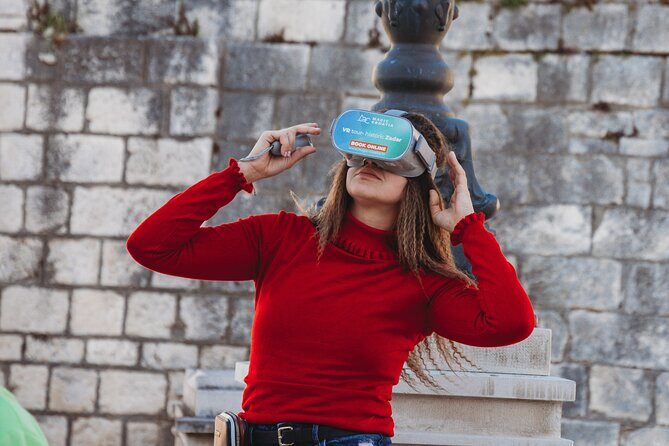
The VR is the main reason this tour feels different from a standard walking tour. At its best, it gives you access to interior spaces you’d otherwise miss and gives you scale—like standing in a Forum center or viewing an entire zone from above.
That said, VR quality can be uneven by stop. One criticism you should factor in is that some segments can come off as basic—more like a panoramic view than a truly interactive simulation. There are also notes about dated-feeling visuals at certain points, plus a physical sensation some people mention when looking down in VR because there may be no obvious floor reference.
The good news is that the guide is there to help you figure out the headset and keep the experience moving. If you treat the VR as a storytelling tool (not a theme-park ride), you’re more likely to enjoy it.
Who this tour fits best (and who might prefer something else)
This is a strong choice if you want:
- A guided walk through Zadar’s key layers of time, with a coherent story thread
- VR headsets included to see interiors and big-picture scenes like WWII damage and the Roman Forum scale
- A compact tour that doesn’t require you to plan museum visits
It’s also a sensible pick for groups who include younger people or people who learn better from visuals. The VR framing—like air views and dramatic historical moments—can make textbook eras feel more concrete.
If you’re extremely picky about VR graphics or you expect highly detailed, fully modern simulations at every stop, you may feel a bit let down. In that case, treat this as a walking tour with helpful VR add-ons, not as a pure virtual reality experience.
Quick value check: is $36.04 worth it?
For me, the value comes from three places.
First, you’re paying for guided context across multiple sites, not just a headset rental. Second, admission is listed as free for each stop, which matters because you’re moving between churches and historic areas without buying separate tickets at each point. Third, the route ends at a modern landmark you can enjoy on foot afterward, so you’re not stuck finishing in an empty street corner.
If you already planned to see the Roman Forum area, St. Anastasia Cathedral, and the Sea Organ anyway, the VR and guide make the experience feel like a “best of Zadar” shortcut with built-in interpretation.
Should you book this Zadar VR guided tour?
Book it if you want an easy, structured way to connect Zadar’s old town with its waterfront—and you like the idea of seeing places like the Forum and cathedral interiors through included VR headsets. It’s also a good match when you prefer a small group pace and want a guide who can explain what you’re looking at in plain language.
Skip it if you mainly care about cutting-edge VR realism or if you’re sensitive to the odd sensation some people report when looking down in VR. In that case, you might still enjoy Zadar with a regular walking tour and your own time at the Sea Organ.
If you’re on the fence, I’d treat this as a history-walk with standout visual storytelling moments. That framing fits the experience exactly—and it’s the best way to get your money’s worth out of those headsets.
FAQ
What’s the duration of the Zadar guided tour with VR?
The tour lasts about 2 hours.
What does the tour include?
It includes a walking guided tour and VR headsets at the listed stops. It also uses a mobile ticket.
Is the tour offered in English?
Yes. The tour is listed as offered in English, and it also notes multiple languages are available.
Where does the tour start and end?
It starts at Magic Croatia – Travel Agency at Poljana Pape Aleksandra III 7 and ends on the sea promenade at the Sea Organ (Obala kralja Petra Krešimira IV).
Are there admission fees for the stops?
The itinerary lists Admission Ticket Free for the stops included in the tour.
What group size should I expect?
The tour has a maximum of 25 travelers.