REVIEW · ZADAR
Zadar Walking Tour sponsored by Gligora Cheese and deli.
Book on Viator →Operated by Elegance Tours · Bookable on Viator
A 90-minute walk can change your whole trip. This Zadar tour is a smart first look at the city’s layers, from medieval squares to Roman ruins, with an extra bonus: practical where-to-eat and shop advice from a local guide and a sponsor spotlight tied to Gligora Cheese and deli. I especially like the easy-to-find meeting point at Narodni trg and how the guide connects each stop to what you’ll notice on your own later. One drawback: the meeting spot can be tricky if you rely on vague directions, so have Narodni trg pulled up on your map before you go.
You’ll cover around 10 key sights on foot in about 1 hour 40 minutes, with departures in the morning or afternoon (three options). It’s offered in English, uses a mobile ticket, and keeps group sizes to a maximum of 30, so it stays friendly rather than chaotic.
Key Points You’ll Care About
- Narodni trg start: right on People’s Square, so you can orient fast.
- 10+ major landmarks in 90 minutes: built for first-timers and history lovers.
- Local food and shopping guidance: with market time at Trznica Zadar.
- St. Simeon and St. Donatus: two stops that explain why Zadar feels Roman, medieval, and Byzantine all at once.
- Small-group feel: capped at 30, with guides like Melina, Sara, Jasmina, and Lucinja frequently mentioned for clear storytelling.
In This Review
- Starting at Narodni trg: the quickest way to orient in Zadar
- People’s Square (Narodni trg): from medieval civic life to Venetian-era stone
- St. Lawrence church remains: the oldest Narodni trg layer
- St. Simeon and the silver casket: why Zadar guards a biblical story
- Five Wells: a defensive ditch turned into a water solution
- Queen Jelena Madijevka Park: a public garden on a military bastion
- Trznica Zadar (market): where lunch ideas start and local shopping makes sense
- St. Chrysogonus (St. Krševan): Romanesque church, abbey leftovers, and a royal secret
- Cathedral of Saint Anastasia: WWII reconstruction and the relic on the altar
- St. Donatus area and the Roman Forum: ruins that feel like they’re still used
- Church of St. Donatus: a circular Byzantine masterpiece on Roman columns
- How the 1 hour 40 minutes actually feels on your feet
- What you get for $18.14: value in orientation plus practical local tips
- Who this tour fits best
- Tips to get more out of the walk
- Should you book the Zadar Walking Tour?
- FAQ
- How long is the Zadar Walking Tour?
- Where does the tour start?
- Is the tour in English?
- How much does it cost?
- Is there an admission fee for the stops?
- How many people are in a group?
- Are there multiple departure times?
- What is the cancellation policy?
- Is a mobile ticket used?
Starting at Narodni trg: the quickest way to orient in Zadar
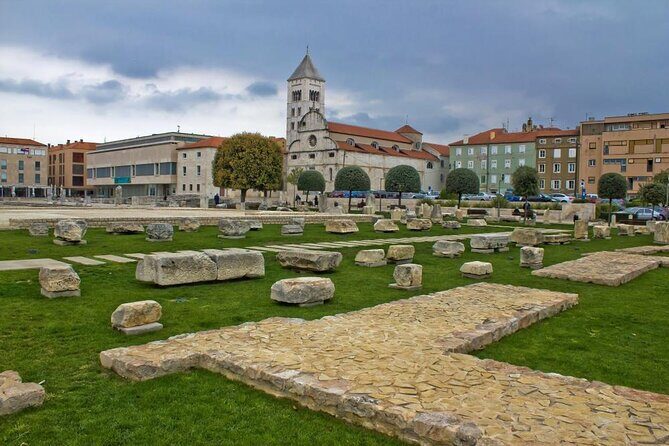
If Zadar is new to you, you need a start point that makes sense immediately. This tour begins at Narodni trg (People’s Square), right in the old center, and it loops back there at the end. That matters because Zadar’s historic core is walkable, but it can still feel like it’s hiding its logic behind layers of streets and ruins.
The biggest practical win is that your “base” is easy to reference. Once you’ve spent time at People’s Square, you’ll understand how the city’s churches and Roman remains are positioned around it. And if you’re juggling dinner reservations or just want your bearings before exploring on your own, an end back at the meeting point is a simple, stress-saving design.
People’s Square (Narodni trg): from medieval civic life to Venetian-era stone
People’s Square traces its roots to the Middle Ages, when it functioned as the center of public life (Platea Magenta). This is also where you’ll spot the City Guard (Gradska straža) designed by Venetian architect Michele Sanmicheli, built in 1562. Even if you don’t remember all the dates, you’ll feel the place was designed for watching, gathering, and governing.
In a short tour like this, I love stops that give you a “why it matters” moment fast. People’s Square is that kind of stop. It frames the whole walk so when you later see wells, churches, and forum remnants, you’re not just ticking boxes—you’re building a mental map.
Other Zadar Old Town walking tours we've reviewed in Zadar


St. Lawrence church remains: the oldest Narodni trg layer
One of the more quietly fascinating parts of this walk is the St Lawrence church remains. These pre-Romanesque remnants date to the 11th century, and you reach them through the premises of Cafe Lovro on the square. That little detail is exactly why guided walking tours beat solo wandering: you learn where the past is literally tucked into everyday life.
Expect a brief, focused look at what’s left and how the site ties into the square you started from. It’s not a long stop, but it’s a helpful reminder that Zadar doesn’t present history in one neat museum package. It’s built into the city’s current rhythm.
St. Simeon and the silver casket: why Zadar guards a biblical story
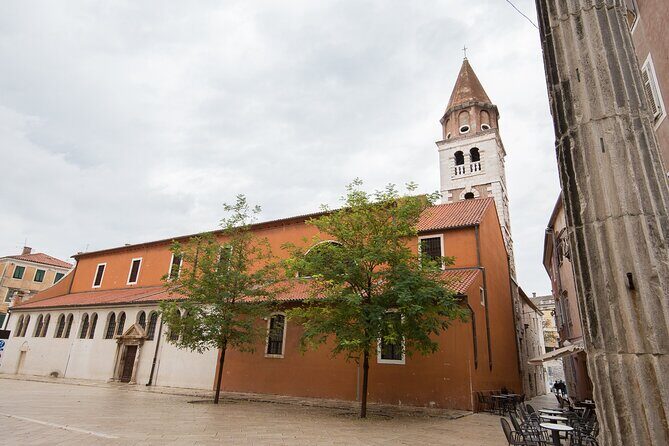
Then you move to St. Simon’s Church, where one of the most striking objects in the whole city is preserved: a mummified body tied to the biblical figure Simeon (Šimun, Šime) in a silver casket. The story is connected to the Gospel of Luke, and the tour frames it in a very local way—Zadar’s patron saint is Saint Simeon, so the relics aren’t just religious artifacts, they’re part of the city identity.
This stop is one you’ll remember later when you’re walking and realize how strongly Zadar’s churches reflect civic pride. Even if you’re not a religious-history deep diver, you’ll come away with an understanding of why this city still keeps its most important stories close.
Five Wells: a defensive ditch turned into a water solution
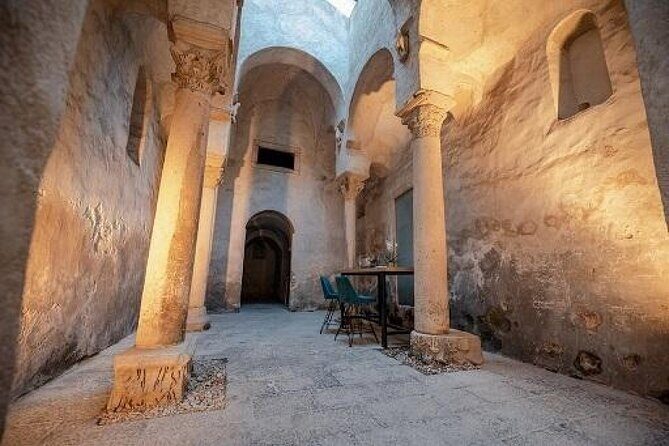
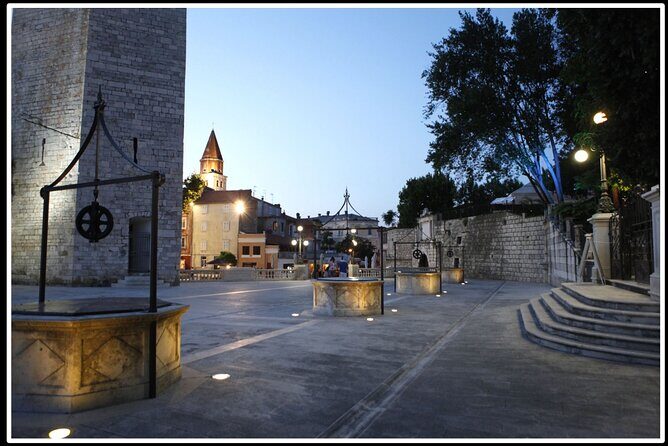
Next up is Five Wells, a square named for five ornamental wellheads lined up in a row. Here’s the clever link the guide helps you see: in the Middle Ages, the area sat below the city walls as a defensive ditch. Later, in the 16th century, Venetians helped Zadar withstand Turkish sieges by building a large water cistern, and the wells became part of that survival plan.
It’s the kind of place that sounds simple until you hear the reason behind the design. When you look at the wells after a quick explanation, they stop being just “a photo spot.” You start thinking like a city planner in crisis mode—which is honestly more interesting than it sounds.
Queen Jelena Madijevka Park: a public garden on a military bastion
Right after Five Wells, you’ll reach Perivoj kraljice Jelene Madijevke (Queen Jelena Madijevka park). This park sits on top of the Grimaldi bastion and was founded in 1829 by Austrian commander Baron Franz Ludwig von Welden, a botanist who admired Dalmatian flora. It was also described as the first public park in Dalmatia, which is a big claim for a small space.
This stop gives you a nice change of pace. After churches and defensive architecture, a park helps your brain reset while still keeping you in the historical storyline. If you like travel that mixes practicality with context, this is exactly that.
Other food and wine experiences we've reviewed in Zadar



Trznica Zadar (market): where lunch ideas start and local shopping makes sense
You’ll spend time at Trznica Zadar, Zadar’s main green market in the old part of town on the peninsula. It also includes a closed fish market, and the whole area is treated as a traditional core of urban life, with a very long uninterrupted history claim.
What I’d focus on here is not just the visuals, but how the guide connects the market to everyday choices. The tour is sponsored by a cheese and deli brand, and multiple guides in this program have been praised for taking people through market food stops and even adding cheese tasting moments (including Pag cheese). Even if you don’t buy anything, you’ll likely leave knowing what to look for and where to go later.
If you’re the type who wants to eat well without getting tricked into tourist pricing, market time is a big value add. It also helps you ask smarter questions later, because you’ll have names and categories in mind.
St. Chrysogonus (St. Krševan): Romanesque church, abbey leftovers, and a royal secret
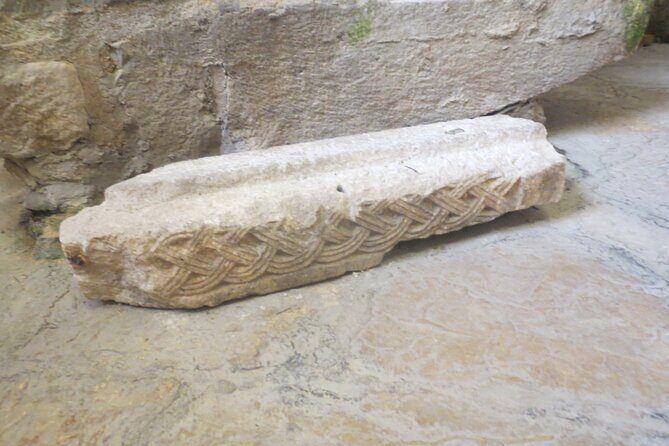
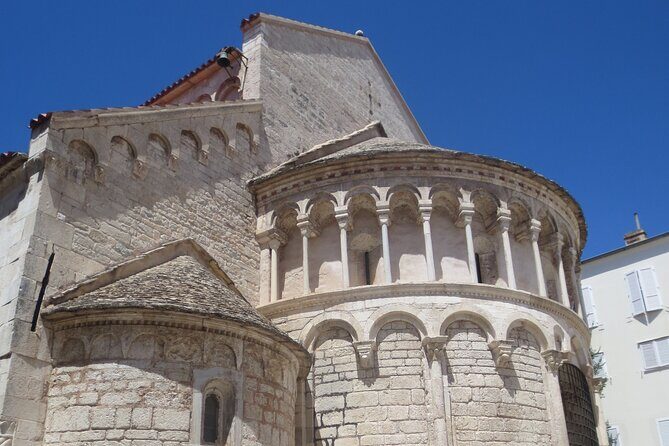
Next is the Church of St. Krsevan (Church of St. Chrysogonus), a Roman Catholic church named for the city’s patron saint. It was consecrated in 1175 by Lampridius, Archbishop of Zadar, and it sits on the site of a Roman emporium. The Romanesque church also replaced an earlier church dedicated to Saint Anthony the Hermit and is the only surviving part of a larger medieval Benedictine abbey.
One of the most dramatic facts you get on this stop: in 1387, Elizabeth of Bosnia—the murdered queen dowager of Hungary and Dalmatia—was secretly buried here. Her body remained for three years before being moved elsewhere. The tour also notes the bell tower construction began in 1485 but was abandoned in 1546 and never finished.
That makes this more than a quick building glance. You’ll understand why the church matters to Zadar’s story even when you’re just passing through the old streets.
Cathedral of Saint Anastasia: WWII reconstruction and the relic on the altar
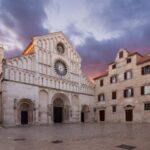
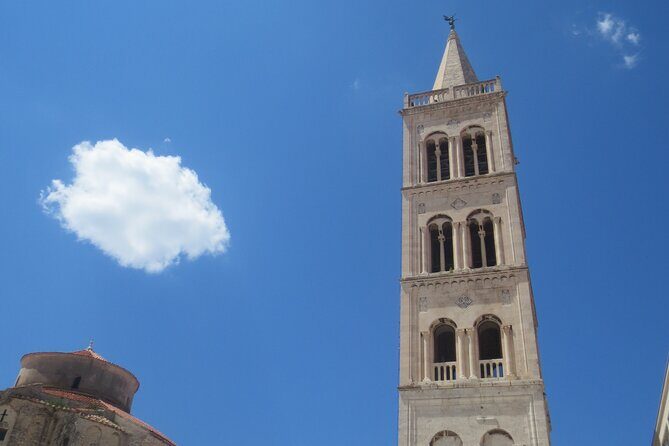
Zadar’s Cathedral of Saint Anastasia was built across the 12th and 13th centuries, and it has a richly decorated facade plus a three-nave interior with remnants of frescoes in side apses. The tour frames it in the context of modern history too: the cathedral was heavily bombed in WWII and has since been reconstructed.
Inside, the altar in the left apse holds a marble sarcophagus containing the relics of St Anastasia. You’ll also notice the choir with lavishly carved stalls. When the cathedral is closed, you can still peer into a glass vestibule, which often helps you catch at least a view even if timing is tight.
St. Donatus area and the Roman Forum: ruins that feel like they’re still used
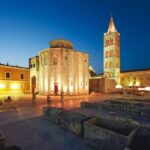
One reason Zadar is so memorable is how Roman ruins seem to appear randomly from the streets. This tour directs you to the ancient Forum area, constructed between the 1st century BC and the 3rd century AD, where civic and religious life once centered. On one side sits St Donatus’ Church, making the relationship between Roman civic space and later religious power easy to visualize.
The stop is short, but it’s the kind of orientation that helps you later when you wander independently. You’ll notice the “why” behind the layout instead of treating ruins as scattered leftovers.
Church of St. Donatus: a circular Byzantine masterpiece on Roman columns
Finally, you reach the star of the show for many people: the Church of St. Donatus. This circular Byzantine-style church dates to the beginning of the 9th century and was named after the bishop who commissioned it. It’s also linked to a major historical survival point: it’s one of only a handful of buildings from the early Croatian kingdom that survived the Mongol invasion of the 13th century.
Inside, the guide points out the simple, unadorned interior and how it includes two complete Roman columns recycled from the Forum. You’ll also see paving slabs revealed after the original floor was removed. The church hasn’t been used for services for around 200 years and often functions as a concert hall or exhibition space these days.
This is a stop that rewards even a casual visitor, because it quietly shows how Zadar reuses materials and ideas instead of starting over from scratch. That blend is part of the reason people fall for this city.
How the 1 hour 40 minutes actually feels on your feet
The tour lasts about 1 hour 40 minutes, and it moves from spot to spot with short explanation stops. That pacing is ideal if you want a lot of landmarks without turning the afternoon into an all-day march.
That said, it’s still a walking tour with multiple stops. If you’re traveling with limited stamina, you’ll want to plan your day so you’re not stacking another heavy activity right afterward. In warm weather, the walking between buildings can feel tight, so light layers and water can be worth it.
The upside: with a maximum group size of 30, you’re less likely to feel like you’re being dragged through the streets. It stays organized, and you get enough time to look around without constantly rushing.
What you get for $18.14: value in orientation plus practical local tips
At $18.14 per person, the pricing is a straightforward value proposition for a city-orientation tour that hits major landmarks. You’re getting a guided path through central sights with free admission noted for each stop, so you’re not paying extra again and again just to see what’s important.
The part that makes it feel worth it is the practical guidance layered on top of the sightseeing: tips on where to eat and shop in Zadar, plus market guidance tied to the Gligora cheese and deli sponsor. In a place like Zadar, that matters because the city is small enough that a couple of good choices can elevate your entire stay.
If you’re the type who likes to return to a square or church you’ve just learned about, this tour also sets you up to enjoy the rest of your trip more. That’s a real value, not just a nice-to-have.
Who this tour fits best
This is a great match if you:
- are visiting Zadar for the first time and want fast orientation
- like churches, ruins, and the story behind city design
- want practical advice for food and shopping, not just facts
It’s also a solid choice for families, since the style of the guides is often described as engaging and helpful for different ages. The English-language format is stated clearly, so it works well if you want explanations without translation hassles.
If you already know Zadar deeply and want longer time in museums or special interiors, you might find the stops a bit brief. But for most people, the structure is exactly right.
Tips to get more out of the walk
Bring comfortable shoes. Many stops are close, but you’ll still cover a lot of ground in under two hours.
Also, arrive ready to look up. A lot of what you’re seeing here is architectural—facades, towers, bastion placement, and how buildings sit relative to the forum and wells. The guide’s explanations help, but you’ll get more if you actually keep your eyes moving.
Finally, if you care about food choices, think about asking your guide where to go right after the tour. You’ll have context in your head by then, especially after seeing Trznica Zadar and hearing local suggestions.
Should you book the Zadar Walking Tour?
Yes, if you want a time-efficient way to understand Zadar’s old town and you like your history connected to what you can see right now. The strong points are the Narodni trg start, the tight 90-minute route through major landmarks like St. Donatus and the cathedral, and the practical food and shopping tips backed by a cheese-and-deli sponsor.
If you hate crowds or worry about finding the exact meeting spot, double-check your map in advance and give yourself a few extra minutes. Do that, and you’ll walk away with a clear sense of place.
FAQ
How long is the Zadar Walking Tour?
The tour runs for about 1 hour 40 minutes.
Where does the tour start?
The meeting point is People’s Square (Narodni trg), 23000 Zadar, Croatia.
Is the tour in English?
Yes. The tour is offered in English.
How much does it cost?
The price is $18.14 per person.
Is there an admission fee for the stops?
The provided details list admission as free for the stops included on the route.
How many people are in a group?
The tour has a maximum of 30 travelers.
Are there multiple departure times?
Yes. You can choose from three morning or afternoon departures.
What is the cancellation policy?
Free cancellation is available up to 24 hours in advance for a full refund.
Is a mobile ticket used?
Yes. You’ll receive a mobile ticket.