REVIEW · ZADAR
Zadar City Tour 120min Walk
Book on Viator →Operated by ZADAR CITY TOUR · Bookable on Viator
Zadar’s sun-and-sea sights turn history into theatre. This 120-minute city walk strings together Zadar’s major landmarks—Roman, pre-Romanesque, and Renaissance—then lands you on the waterfront for two installations that still feel like they belong to the future.
I especially like two things: the small group size keeps the pace human, and the tour makes the Sea Organ and Greeting to the Sun part of the story, not just photo stops. My other big plus is that guides like Dorja/Dorija (and Ivan, depending on your departure) explain what you’re looking at in clear, practical terms.
One possible drawback: expect fair walking on uneven old-town streets, and there are no included toilet breaks. If you’re managing mobility limits, you may want to rethink the tour or pair it with frequent breaks.
In This Review
- Key highlights
- Why this Zadar Walk Works in Only Two Hours
- Meeting the Day: Solar System Art at Greeting to the Sun
- The Sea Organ: When the Shore Plays Music for You
- St. Anastasia Cathedral: A Big Look Without the Ticket Line
- The Roman Forum: Where Zadar’s Ancient Center Still Reads Clearly
- St. Donatus: A Rotunda That Looks Like It Belongs in a Different Era
- Benedictine St. Maria: Monastery Lines and a Renaissance Church
- Sea Gate and Narodni trg: Medieval Squares With a Roman Hint
- Churches of St. Simon and the Power of Artful Craft
- Knezeva Palaca and Five Wells: The Past in Plain Urban Form
- Captain’s Tower and the First Public Park Mood
- The Evening Option: 18:30 Starts at the Land Gate
- Price and What You’re Really Paying For
- Walking Comfort, Pace, and Who It Suits Best
- Pickup: When It Helps and How Not to Get Stuck
- Tips to Get Better Photos and Better Understanding
- Should You Book the Zadar City Tour 120min Walk?
- FAQ
- How long is the Zadar City Tour?
- What language is the tour in?
- Is pickup included?
- Are entrance tickets included for the stops?
- Does the tour include any tastings?
- Is this tour suitable for children?
- Where does the 18:30 tour start?
Key highlights

- Greeting to the Sun solar-system artwork you can time for the best light
- Sea Organ working “piano keys” where the sea makes the music
- Roman Forum + Romanesque/Pre-Romanesque churches in one tight route
- Free-to-view landmarks mostly outside, so you’re paying for guidance more than tickets
- Optional extras on the way like maraschino and cheese tastings (when offered)
- Small group max of 16, usually easier to hear and follow than bigger tours
Why this Zadar Walk Works in Only Two Hours
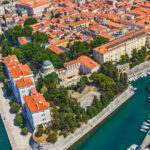
This tour is built for people who want the big picture fast, without doing the usual sprint through a historic center. Zadar’s Old Town can feel like it’s all concentrated in a small area—so you get to cover a lot of ground while staying focused on what actually makes the city tick.
The route is also smart because it mixes “hard history” with “why it matters today.” You start with the waterfront installations (the Sea Organ and Greeting to the Sun), then move inland through Roman ruins, churches, and squares. It’s basically a guided timeline you can walk.
The group limit (up to 16) makes a real difference. You’re not fighting a crowd to hear explanations, and the pace is steady enough that you can take photos without constantly lagging behind.
Other Zadar Old Town walking tours we've reviewed in Zadar


Meeting the Day: Solar System Art at Greeting to the Sun
The walk kicks off at Greeting to the Sun, with your guide waiting under a ZADAR CITY TOUR umbrella near the installation. The artwork is laid out as a representation of the solar system on the floor, powered by a sense of light and energy that fits Zadar’s coastline so well.
What I like here is that this isn’t just a pretty object. Your guide frames it as part of modern Zadar identity—proof the city isn’t only trading on ancient stones. If you’re doing the 11:00 tour, this is a solid start. If you have time later, it’s also one of those things that can feel better with night lighting around it, so the option to return after the tour can be worth it.
At the practical level, you’ll be standing in one of Zadar’s most photogenic spots early enough to avoid the worst crowds.
The Sea Organ: When the Shore Plays Music for You
Next comes the Sea Organ, one of Zadar’s most talked-about installations. It’s designed like a staircase shaped into a piano keyboard, and it “sings” with the help of the sea. The idea is that passing water creates air movement through pipes—so the sound is coming from nature doing its job.
This stop is short in time (about 10 minutes), but it’s long enough to let you understand what you’re looking at. It’s also the kind of sight where your photos don’t fully capture the effect, so the guide’s explanation matters. You’ll leave with a mental model you can reuse the next time you see water-driven design.
The Sea Organ also sets the mood for the rest of the walk: once you’ve seen a modern installation that feels connected to the city’s geography, the shift to Roman and medieval structures feels less random.
St. Anastasia Cathedral: A Big Look Without the Ticket Line
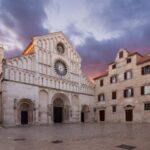
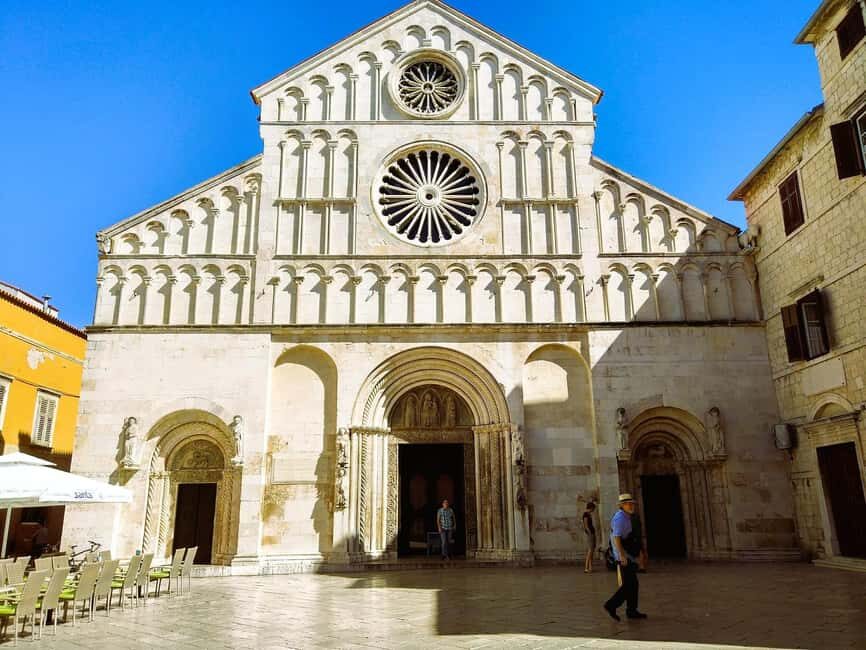
From the promenade you head toward the Cathedral of Saint Anastasia. This is the big Romanesque church in Dalmatia, and it’s linked to St. Anastasia as the city patron. On this walk, you don’t go inside—so the emphasis is on exterior features and the story your guide gives you.
That’s a trade-off. You miss the experience of seeing interior details firsthand. But you gain time for other stops, and you avoid ticket timing problems. Since so many of the major sites on this route are either exterior or free to view, it keeps the whole walk from turning into a queue marathon.
The Roman Forum: Where Zadar’s Ancient Center Still Reads Clearly
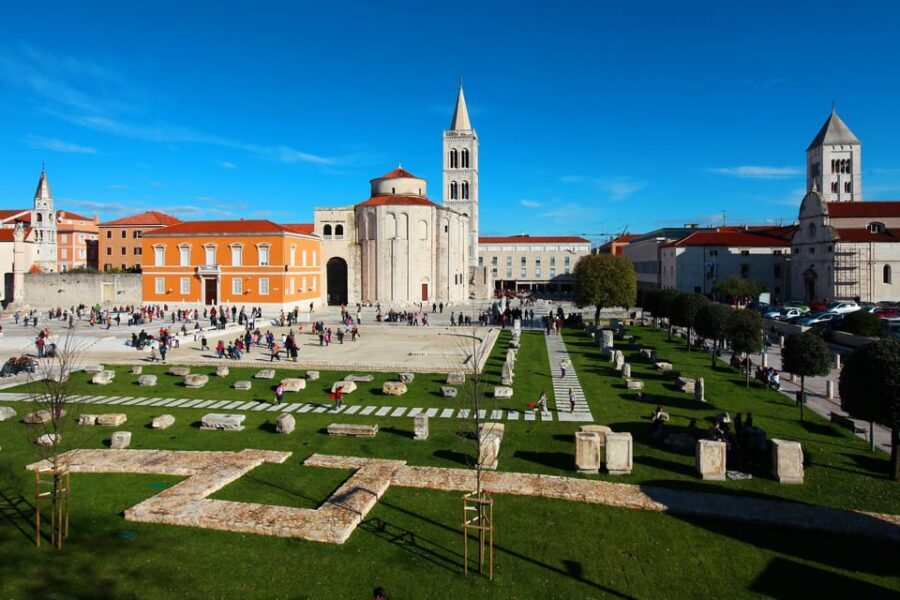
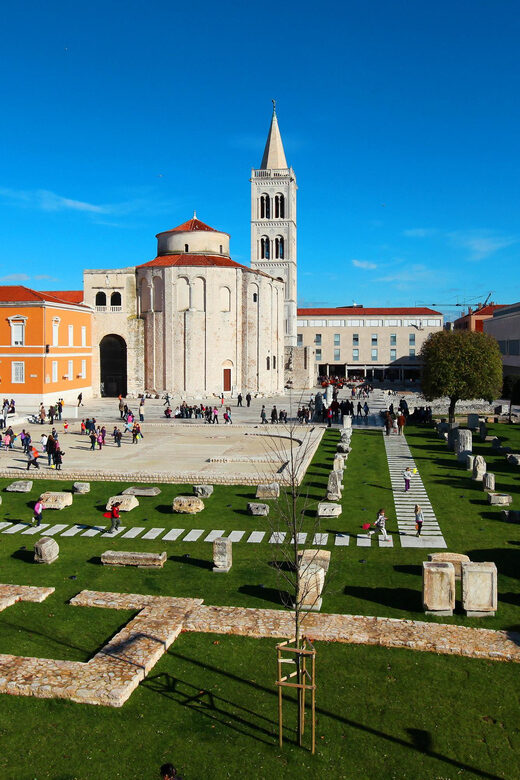
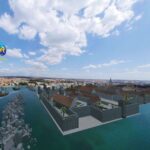
The Forum stop takes you back to the 1st century BC. You’re standing in a space surrounded by remnants of ancient Roman architecture, in the middle of the peninsula of Zadar. This is where Zadar feels most like a layered city: stone that’s still “legible” even after centuries.
The best part of this stop is the way your guide connects geometry and location. Roman forums weren’t just for spectacle—they were civic engines. When you understand that, the scattered remains stop looking like random rocks and start reading like an intentional public space.
This is also a nice moment to slow down slightly and look around. Even without going in, you can usually spot how the area opens and where major buildings would have sat.
Other walking tours we've reviewed in Zadar




St. Donatus: A Rotunda That Looks Like It Belongs in a Different Era
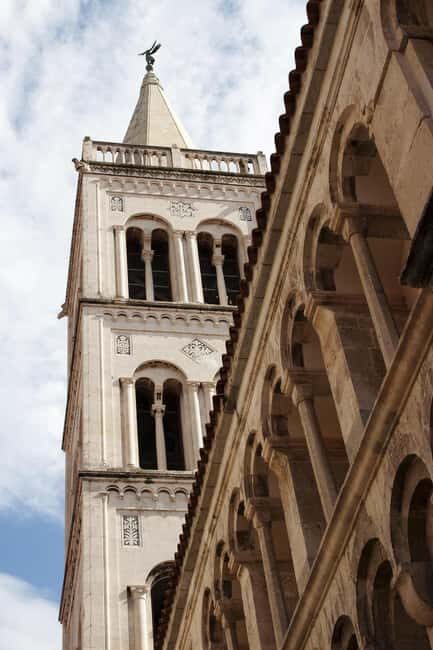
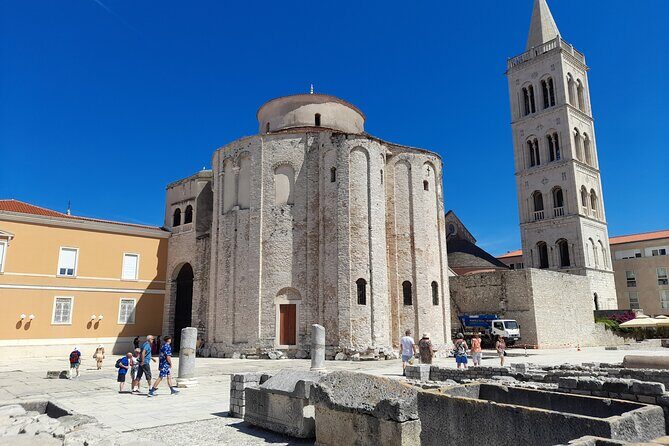
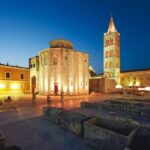
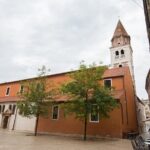
Then you reach the Church of St. Donatus, built in the 9th century and described as pre-Romanesque in style. The structure is a huge rotunda that sits within the Roman Forum area, which makes it feel like two centuries of power meeting in the same footprint.
Again, no entrance on this walk. But this is one of those buildings where seeing the shape from outside is exactly the point. The rotunda form is striking even at a distance, and it’s the kind of thing you’ll remember long after you’ve walked away.
If you’re a first-timer in Zadar, this stop helps you understand why the city attracts attention from architecture lovers. It’s not just old—its oldness still has personality.
Benedictine St. Maria: Monastery Lines and a Renaissance Church
Next is the Benedictine Monastery of St. Maria. It’s a long-time feminine convent presence dating to the 11th century, with a Renaissance church component. Your guide also notes a permanent exposition of religious arts associated with the convent.
On this tour, you don’t enter. Still, this stop matters because it shows you the spiritual and cultural institutions that shaped daily life over centuries. It’s one of the transitions between the Roman core and Zadar’s later layers.
If you’re the kind of visitor who likes to add a self-guided ticketed visit afterward, this is one you’ll probably want to investigate further on your own, since the permanent exposition is specifically mentioned.
Sea Gate and Narodni trg: Medieval Squares With a Roman Hint
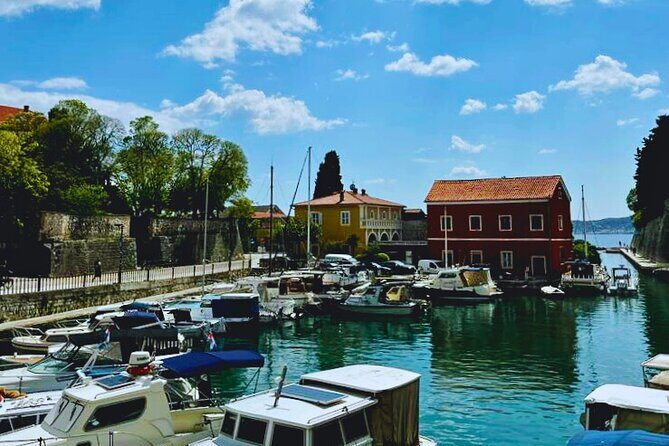
After the churches, the walk shifts into streets and squares.
The Sea Gate (Morska vrata) is a 16th-century structure with Roman elements. Even if you only glance at it while passing, it’s a good example of how Zadar keeps borrowing from itself—older motifs reused in later centuries.
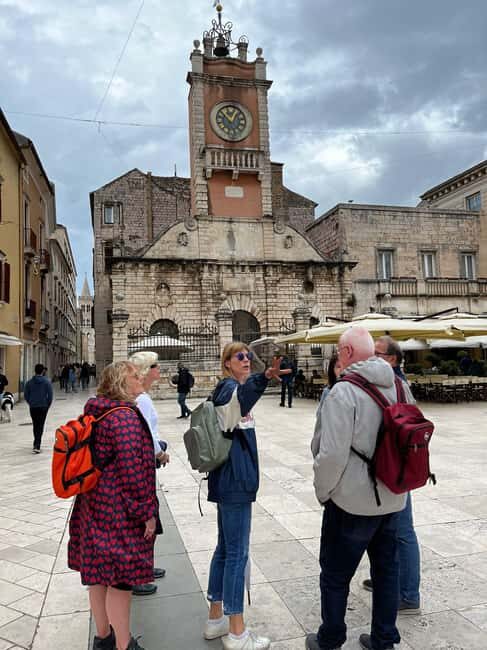
Then you step into Narodni trg, a medieval square bordered by a 16th-century loggia and a city guard presence. This is a “breathe and reset” moment in the walk. Squares give you a mental pause, and your guide usually uses them to connect themes across the stop chain—trade, governance, faith, and defense.
Churches of St. Simon and the Power of Artful Craft
Next comes St. Simon’s Church, another stop where you mostly look from the outside. It’s Renaissance, and the story centers on the body of the saint kept inside a large 14th-century sarcophagus, described as a goldsmith’s masterpiece.
Even without entry, your guide’s description gives you something to picture. That’s one of the tour’s quiet strengths: it turns “no entrance” stops into moments of imagination. Instead of feeling like you paid to look at walls, you understand why those walls matter.
Knezeva Palaca and Five Wells: The Past in Plain Urban Form
You then pass the Knezeva Palaca Zadar (Rector’s Palace). It’s recently restored, and while there’s no entrance on this walk, the timing is useful: restoration work often changes how a building reads, and your guide can help you notice what’s newer versus older.
Next is Five Wells, a Renaissance square defined by five well crowns. It’s short (around five minutes), but it’s a great place to understand how practical needs—water—shaped the layout and identity of a public space.
This is also a good stop for photos, since the visual pattern of the wells gives you something clear to frame.
Captain’s Tower and the First Public Park Mood
The final stretch of the Old Town highlights includes the Captain’s Tower with medieval crown walls. No entrance here either, but towers are built to be seen and understood from the street—so they’re perfect for a walking tour timeline.
Then you end at Perivoj kraljice Jelene Madijevke, described as one of the first public parks in Croatia. This park moment gives you a little green-air contrast after dense streets and stone monuments. Even if it’s only a brief stop, it helps the tour feel like a journey rather than a checklist.
The Evening Option: 18:30 Starts at the Land Gate
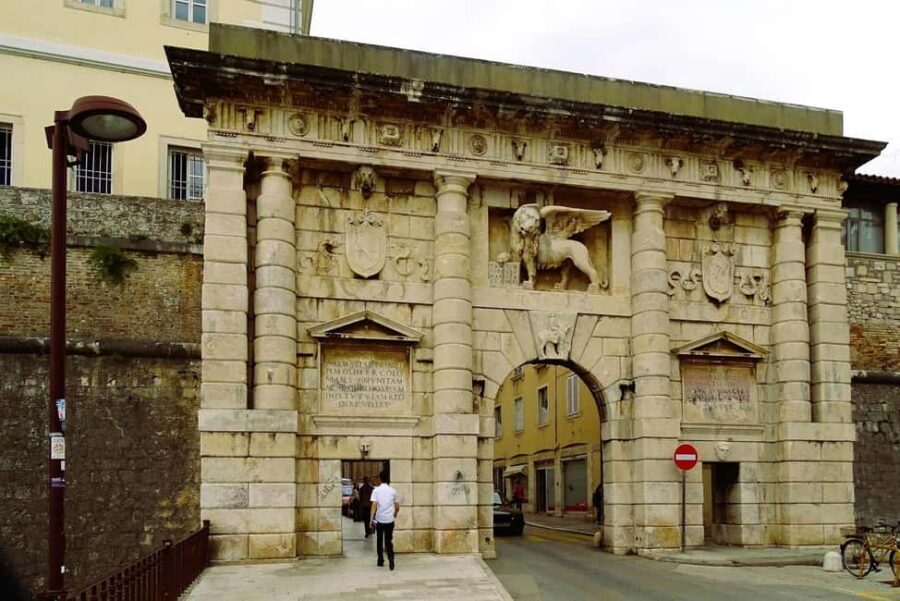
There’s also an 18:30 departure that starts from the Land Gate (Zadar Land City Gates), built as a triumphal arch form associated with the Venice Republic theme. Your guide waits in front of the gates beside the bikes.
If you’re interested in seeing the Greeting to the Sun with better evening light, the evening schedule can fit naturally into your day. The trade-off is that you’ll be planning your whole Old Town walk around that start time.
Price and What You’re Really Paying For
At $32.67 per person for about two hours, this tour isn’t priced like an attraction with entrance fees baked in. And that’s the key: most stops are either exterior or specifically marked as no entrance. You’re paying primarily for route design and interpretation—someone to explain what Roman ruins, rotundas, and waterfront installations mean together.
The value improves if you take advantage of the optional extras that sometimes appear along the way, like maraschino and cheese tastings (or a possible free entrance to a medieval church). Even when those extras don’t happen, the tour still makes sense because you avoid time wasted trying to piece the city together on your own.
Group discounts are offered too, so if you’re coming with friends, it can become a pretty efficient way to see a lot without hunting down multiple tickets and meeting points.
Walking Comfort, Pace, and Who It Suits Best
This is a walk, not a sit-down tour. The route is tight and centered on classic Old Town streets. Reviews highlight that guides tend to manage the pace well, and one guide was noted as adjusting for seniors with shade and bench considerations.
Still, it’s not marketed as child-friendly, and it isn’t recommended for mobility issues. If you’re using a walker, dealing with knee pain, or you tire quickly on uneven ground, you’ll likely feel the route.
On the upside, the group size stays small (max 16), so it’s easier for your guide to keep track of everyone and for you to ask quick questions mid-walk.
Pickup: When It Helps and How Not to Get Stuck
Pickup is only included on the option that specifically says with pickup. If you’re using it, you’re looking for a black minivan with the white ZADAR CITY TOUR logo. The driver will have your name on paper.
For cruise ship days, Zadar has two ports. If your ship docks in the center area in front of the meeting point, pickup may not be needed. Communication about pickup time and place is handled via platform messaging, email, or WhatsApp, so the real-life success factor is staying responsive and matching the right meeting location.
There’s also a simple rule I’d follow: if you’re arriving by cruise ship, double-check what port you’re at before you assume the meeting point is the one you saw on your map.
Tips to Get Better Photos and Better Understanding
A small number of choices can make this tour feel much richer.
- Wear shoes you’d actually trust on cobblestones. This is an active walk.
- Bring water and take your cue from your guide about where shade is available.
- If you want the Greeting to the Sun at its best, plan extra time later—especially around evening light.
- Ask one question early. Once you understand how your guide is interpreting Zadar’s layers, the rest of the stops click faster.
Should You Book the Zadar City Tour 120min Walk?
Book it if you want an efficient first look at Zadar’s top landmarks—Roman remnants, signature churches, and the waterfront installations—under a small-group format. The tour is also a good fit if you like guided explanations and don’t want to spend your limited time hunting down what to see and why.
Skip or change plans if walking is a challenge for you, if you need frequent bathroom stops, or if you’re hoping for mostly ticketed museum-style interiors. This is a see-it-now walking tour where the “tickets” are mostly in the storytelling, not in entering buildings.
If you’re doing Zadar as a port day, this is a strong use of time. And if Zadar ends up surprising you (as it often does), you’ll have a perfect shortlist for what to return to after the walk.
FAQ
How long is the Zadar City Tour?
The tour is about 2 hours.
What language is the tour in?
The tour is offered in English.
Is pickup included?
Pickup is possible, but it’s included only if you book the option with pickup.
Are entrance tickets included for the stops?
Entrance tickets are not included for institutions that charge. Many stops are free to view, but several churches/monastery areas are marked as no entrance.
Does the tour include any tastings?
It may include free maraschino and cheese tastings, depending on what’s offered along the way.
Is this tour suitable for children?
No, it is not suitable for children.
Where does the 18:30 tour start?
The 18:30 tour starts from the Zadar Land City Gates (Venice Republic Land Gate). The guide waits in front of the gates beside the bikes.