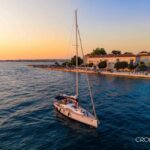
Wind makes music in Zadar.
This 2-hour city route is packed with major landmarks, starting at the Greeting to the Sun and ending on the peninsula near Trg pet bunara. I especially like how the stops are set up so you see iconic Zadar in a logical flow, without wasting time backtracking.
The other big win is the certified local guide. You get clear context on what you’re looking at, which helps the places feel more than just photo spots. The only catch is that some of the most impressive interiors are not included in the ticket price, so you’ll want to plan a little extra for entrances.
In This Review
- Key things I’d bet on before you book
- Where this tour fits in your Zadar day
- The price: what $48.50 gets you (and what it doesn’t)
- Starting at the Greeting to the Sun: a clever kickoff
- Sea Organ: the wind-powered sound show (free)
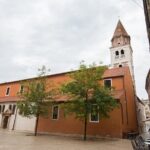
- St. Anastasia Cathedral: big, Romanesque, and worth the interior time (paid)
- Church of St. Donatus: unusual shape and acoustics (inside focus without the long stay)
- Roman Forum: the largest one on the eastern Adriatic (free)
- St. Simon’s Church: a major Christian relic connection (free)
- St. Mary’s Church and Monastery: Gold and Silver exhibition in a Benedictine setting (paid)
- Group size and pacing: why the 2 hours feels doable
- English guiding that actually helps you see
- What to wear and bring for a smooth morning walk
- Should you book the Zadar City Tour?
- FAQ
- What’s the tour duration?
- How much does the Zadar City Tour cost?
- What language is the tour offered in?
- Where does the tour start and end?
- Are tickets included for all stops?
- How big is the group?
- Is there free cancellation?
- Do I need a printout ticket?
Key things I’d bet on before you book
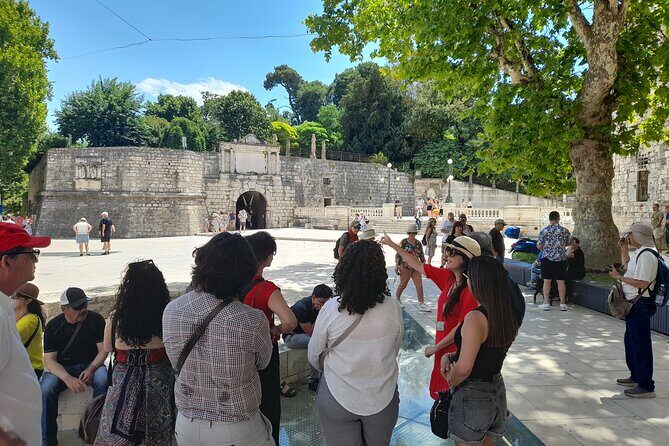
- Small group size (max 15) for a calmer pace and better Q&A
- Free highlights like the Sea Organ and the Roman Forum included in the visit time
- St. Donatus Church focus on the acoustics and unusual shape
- Separate admissions for St. Anastasia Cathedral and the Gold and Silver Church Art exhibition
- Mobile ticket for easier check-in on the day
Where this tour fits in your Zadar day
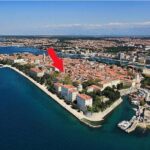
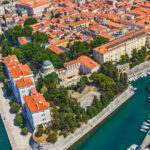
Zadar is one of those cities where the center feels walkable, but the highlights can spread out enough that a self-guided day turns into lots of routing and guessing. This tour solves that problem with a tight, timed route that hits the big names: Sea Organ, St. Anastasia Cathedral, St. Donatus, the Roman Forum, and key churches around the old core.
Because it runs around 10:30 am and lasts about two hours, it works well as either:
- your first introduction to Zadar, or
- a focused second round if you’ve already done the long “wander” part of the day.
And it’s offered in English, which matters here because the storytelling really is part of the value. You’re not just looking at stone; you’re being guided through what makes each site meaningful.
Other Zadar Old Town walking tours we've reviewed in Zadar


The price: what $48.50 gets you (and what it doesn’t)
At $48.50 per person, you’re paying for a guided, timed walk with a certified local guide and a bunch of major stops packed into a short window. What makes the price feel reasonable is that several of the best photo-and-look-at-it sites are listed as free during the visit time.
Still, two things are not included:
- St. Anastasia Cathedral entrance
- St. Mary’s Church and Monastery, specifically the Gold and Silver Church Art exhibition
So the smartest way to judge value is this: if you’re excited to go inside the cathedral and the monastery exhibition, this tour is efficient because it brings you there. If you’re okay viewing the outside only at those paid sites, you can keep costs down, but you’ll miss part of the depth the guide can explain.
Starting at the Greeting to the Sun: a clever kickoff
You begin at the Greeting to the Sun along Istarska obala. It’s a fitting start because it sets the theme for the next stop: sound, light, and the way Zadar blends modern design ideas into a historic setting.
From there, you transition into the center where the oldest parts of town start to take over. Starting here also helps if you’re already nearby in the morning, since it’s an easy anchor point to find and orient yourself.
One small practical tip: arrive a few minutes early so you’re not rushing when the group gathers. With a maximum of 15 travelers, the meeting moment matters.
Sea Organ: the wind-powered sound show (free)

The Sea Organ is the first stop, and it’s one of Zadar’s most famous modern monuments. The basic idea is simple and cool: the structure is powered by wind and the waves, turning ocean motion into music-like tones.
You’ll spend about 20 minutes here. That’s enough time to:
- watch the shoreline setup and listen for how the sound changes with the water, and
- take a few angles for photos without feeling rushed.
Why I think this stop is worth leading off with: it’s the quickest way to get oriented. The moment you hear or notice the effect, the rest of the walk starts to feel like more than a list of churches and ruins. It becomes a story about how Zadar uses the environment.
St. Anastasia Cathedral: big, Romanesque, and worth the interior time (paid)
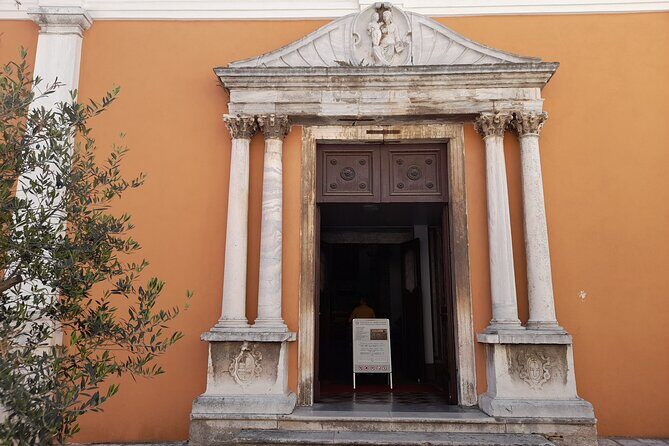
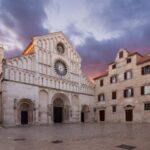
Next is the Cathedral of St. Anastasia, and you’ll have about 20 minutes. It’s described as the biggest cathedral in Dalmatia, built in the 12th century in a Romanesque style. The exterior is impressive, but the interior is where it tends to really land.
This stop is not included in the tour price, so you’ll pay admission on your end. If you’re deciding whether to go inside fully, this is one of the places where I’d say yes. The cathedral is highlighted as having a monumental feel and an impressive interior, and the guide can help you look at details you might otherwise miss.
A practical thought: cathedrals can mean slower moving crowds and shifting light, so don’t plan this as a “grab a fast look” stop. Use your 20 minutes wisely.
Other city tours we've reviewed in Zadar



Church of St. Donatus: unusual shape and acoustics (inside focus without the long stay)
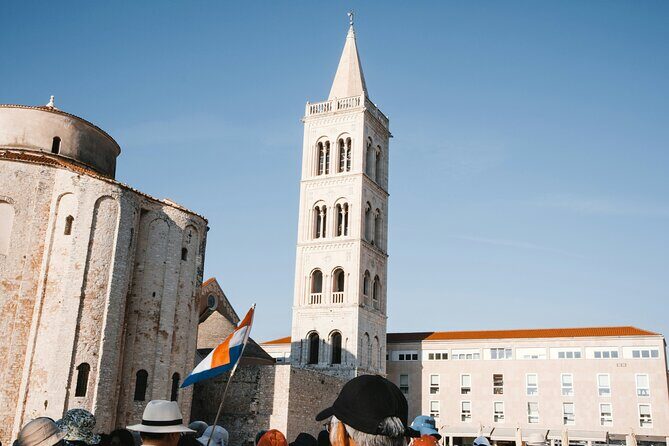
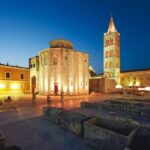
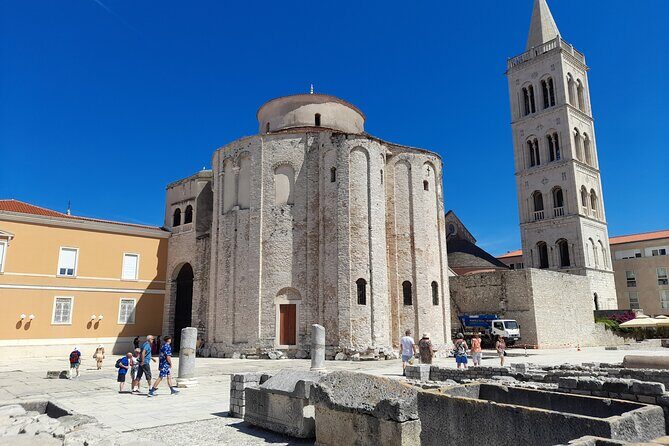
The Church of St. Donatus is one of Zadar’s symbols. You’ll have about 10 minutes, and that short window is clearly designed to hit the essentials.
Why this place gets attention: it’s known for its unusual shape and for the acoustics. Even if you’re not the type to obsess over architecture, acoustics are one of those “try it and you get it” experiences. The guide will help you understand what to pay attention to in the space.
Because this stop is shorter than the others, it works best if you keep moving with the group and don’t get pulled too far into side distractions. Use the time for the core experience the site is famous for.
Roman Forum: the largest one on the eastern Adriatic (free)
Then you’re at the Roman Forum, set out as the largest forum built on the eastern side of the Adriatic. You’ll spend about 20 minutes, and it’s listed as free for the visit time.
This is a good stop for two reasons. First, it helps you connect Zadar’s present with its Roman past in a way that feels physical, not just historical. Second, open-air ruins make it easier to pace yourself. You can step back, look across the space, and get a sense of where daily life likely happened.
If you like archaeology or even just “I enjoy figuring out what used to be where,” this stop is one of the best uses of your short tour time.
St. Simon’s Church: a major Christian relic connection (free)
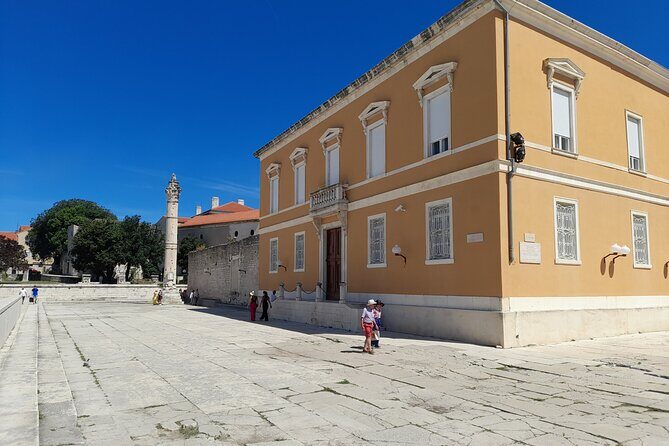
Next is St. Simon’s Church, with about 20 minutes and free admission for the visit time. The centerpiece detail is that the church holds the body of St. Simon, described as one of the most prized artifacts in the Christian world.
This is one of those stops where the value isn’t only in what you see, but in what you understand. The guide’s explanations help you connect why this church matters beyond local tourism.
A gentle caution: if you’re not into religious sites, it can still feel meaningful as heritage and art-in-place. But you’ll get the most out of it if you’re open to the spiritual significance aspect, not just the architecture.
St. Mary’s Church and Monastery: Gold and Silver exhibition in a Benedictine setting (paid)
The final stop is St. Mary’s Church and Monastery, with about 30 minutes. This is the most time you’ll spend at one location on the tour, and for a reason.
Here, you’re looking at the Zadar Gold and Silver Church Art exhibition inside the monastery, held under the supervision of Benedictine nuns. Admission here is not included.
Why the extra time matters: art like this doesn’t reward speed. You want a little space to look at pieces, understand the theme, and connect it to what you’ve already seen in the churches before you. With 30 minutes, you should have enough time to see the main points the guide is pointing out without feeling like you’re racing.
If you’re a museum person, this is likely your favorite stop. If you’re more into outdoor sights, consider this your culture buffer. Either way, it’s a strong ending because it shifts from open-air ruins and exteriors into craftsmanship and sacred objects.
Group size and pacing: why the 2 hours feels doable
A key detail here is the group limit: up to 15 travelers. That’s big enough to be lively but small enough that the guide can keep people together.
The timing is also practical. You’re looking at short blocks at most stops (10 to 20 minutes), with the paid exhibition getting the longest segment at 30 minutes. That means you’re not stuck in line for hours or stuck listening in one place for too long.
If you’re traveling with limited time in Zadar, this structure is one of the best ways to feel like you covered the essentials while still ending the tour without feeling drained.
English guiding that actually helps you see
The tour is offered in English, and the guide is certified. That matters more than you’d think because sites like St. Donatus and the Roman Forum can look “interesting” even when you don’t know what you’re looking for.
With good explanations, you start noticing patterns: why a building was made the way it was, how sound works in a specific space, and how a forum functioned in everyday city life. It turns the walk into something you remember, not just something you pass through.
Also, keep an eye out for the guide’s pacing cues. When your time is tight, it helps to know when to slow down and when to move on.
What to wear and bring for a smooth morning walk
This is a walking-focused city tour, so you’ll be happier if you plan for the basics:
- Wear comfortable shoes you can stand and walk in
- Bring water if you’re doing this in warmer weather
- Keep your phone charged since you’ll likely rely on the mobile ticket
If you know you’ll want to enter the paid sites, plan for that too. Bring whatever you need for admissions (and allow a few minutes for ticketing if lines form).
Should you book the Zadar City Tour?
I’d book this tour if you want a fast, well-guided hit of Zadar’s top sights in about two hours. It’s especially good for first-timers who want the Sea Organ experience, the Roman-era context of the Forum, and the unmistakable silhouettes of St. Donatus and the main churches, all with a guide who helps you read the places.
You might skip it if you prefer long, slow museum time or if you’re only interested in outdoor views. Because key interiors are not included, you’ll need to add admissions if you want the full experience the route is designed around.
FAQ
What’s the tour duration?
The tour runs for about 2 hours.
How much does the Zadar City Tour cost?
It costs $48.50 per person.
What language is the tour offered in?
The tour is offered in English.
Where does the tour start and end?
It starts at Greeting to the Sun on Istarska obala (23000 Zadar) and ends at Trg pet bunara (23000 Zadar).
Are tickets included for all stops?
No. Some stops are free during the visit time, but places like St. Anastasia Cathedral and St. Mary’s Church and Monastery (Gold and Silver exhibition) are not included.
How big is the group?
The tour has a maximum of 15 travelers.
Is there free cancellation?
Yes. You can cancel for a full refund if you cancel at least 24 hours before the experience’s start time.
Do I need a printout ticket?
No. You’ll receive a mobile ticket.
If you tell me your travel dates and whether you plan to enter the paid sites, I can help you decide if the timing and added admissions make the most sense for your day in Zadar.