REVIEW · ZADAR
Zadar City Tour 120min Walk
Book on GetYourGuide →Operated by ZADAR CITY TOUR, Tourist agency · Bookable on GetYourGuide
Zadar tells its story in two hours. This walk strings together the Sea Organ’s modern sound and 3,000-year-old streets, so you get both drama and explanation. One thing to consider: it’s still a steady city walk, so plan for time on your feet and bring good shoes.
I like that the guide keeps the route focused on what you’re actually looking at, not random trivia. The fact that the tour starts at the Greeting to the Sun (and, for sunset lovers, can connect with the evening plan at the Land Gate) makes it easy to time your day. You’ll also get a real sense of the city’s mix of religious, Roman, and civic power.
Price-wise, $28 is a fair ask when you add the guided stops plus the frequent chance of a tasting or a possible free medieval church entrance along the way. Still, you should know entrances that charge tickets aren’t included, and there are no built-in toilet breaks.
In This Review
- Key points before you go
- Why this Zadar walk feels smarter than a quick hit
- Greeting to the Sun and the Sea Organ: start with something you can feel
- Cathedral of St. Anastasia: where the tour pauses to explain the why
- Roman Forum to St. Donatus: the route that makes ancient Zadar real
- Monastery, street segments, and the short walks that add up
- Market Zadar: the tasting stop that makes the tour more memorable
- People’s Square and the Church of St. Simon: the civic-meets-religious zone
- Five Wells Square and the Land Gate lion: the finish with power symbols
- Price and value: $28 for guidance, context, and optional extras
- Transport and group setup: pickup is simple if you want it
- Who this tour is best for (and who should skip it)
- Practical tips that make the walk smoother
- Should you book the Zadar City Tour 120min Walk?
- FAQ
- How long is the Zadar City Tour 120min Walk?
- Where does the tour start?
- Is pickup available?
- What languages are the live guides available in?
- Are entrance tickets included?
- Is there tasting during the tour?
- Where do you get dropped off at the end?
- Is this tour suitable for kids or older travelers?
Key points before you go

- Sea Organ first: You’ll hear how the promenade’s instrument works before you move inland.
- Ancient-to-medieval route: Roman Forum, St. Donatus, St. Anastasia, and more in one line.
- Food moment included: A market stop with an aperitif and cheese tasting is part of the experience.
- Optional tastings/free entrance: High season often includes them, but Sundays/holidays and low season can change things.
- Guide-led, not rush-led: The pace is designed to give you context at each stop.
- Pickup option exists: If you book it, you’ll meet a black Peugeot Traveler with a ZADAR CITY TOUR logo.
Why this Zadar walk feels smarter than a quick hit
If you only glance at Zadar’s sights, you can miss the point. The value of this tour is how it connects landmarks into a story: sound and sea, then churches and civic squares, then the power symbols guarding the old approach to the city.
I like that it’s built for cultural heritage lovers who want material facts—what you’re seeing, why it was placed there, and how it relates to what came before. It’s also a practical length: about 2 hours of walking time with stops (listed as up to 150 minutes total), which is long enough to feel like a proper orientation but short enough to still enjoy the rest of your day.
One caution: it’s not for people who need frequent breaks, and it’s not designed around slow, step-by-step mobility. If you have respiratory or heart issues, recent surgery, or you’re traveling with mobility limitations, the tour isn’t recommended.
Other Zadar Old Town walking tours we've reviewed in Zadar


Greeting to the Sun and the Sea Organ: start with something you can feel
The tour begins at the Greeting to the Sun installation, a clean starting point because it sets the mood. This is modern Zadar, but it’s not random modern art—it connects directly to the city’s relationship with the sea and light.
Then you shift to the Sea Organ (Morske Orgulje) on the promenade. You’ll listen to the music before the tour moves up toward the major church cluster. That order matters. Hearing it first makes everything that follows feel like a continuation of the same city: the coast, then the institutions inland.
This is also where I’d suggest you slow down mentally. Even if you think you already know what you’ll see, the guide’s explanation gives you something to watch for while you listen—how the sound fits the space and why people consider it a defining Zadar experience.
Cathedral of St. Anastasia: where the tour pauses to explain the why
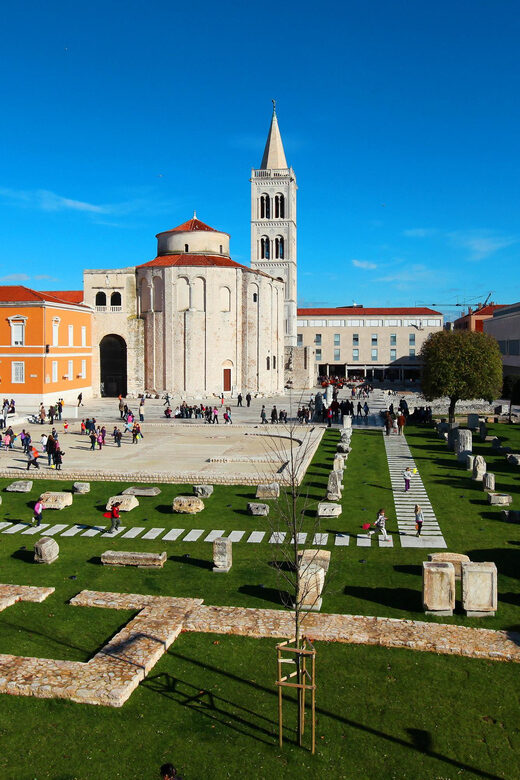
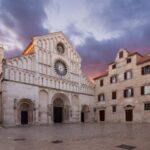
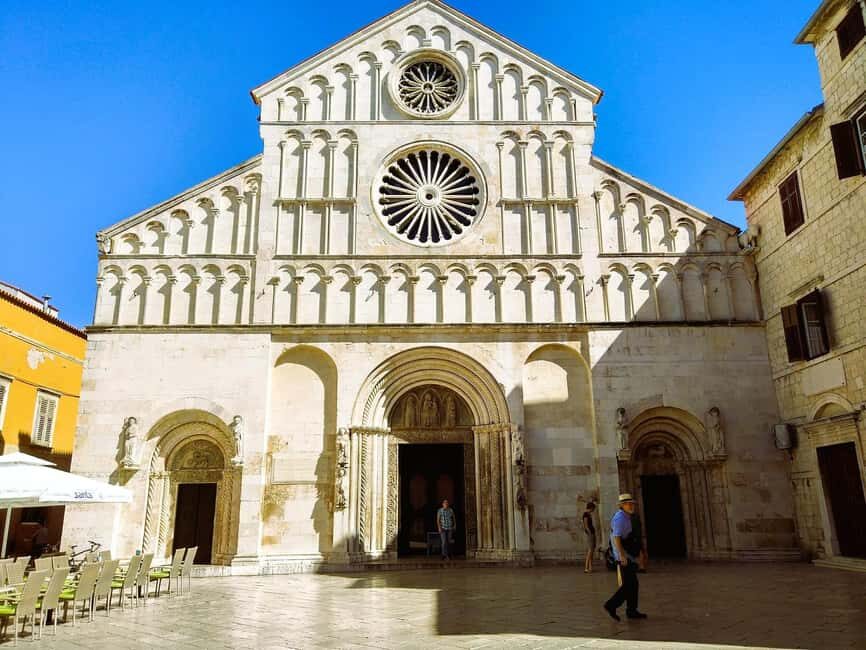
Next comes the Cathedral of St. Anastasia. Expect guided storytelling and sightseeing time rather than a long stay. The big takeaway here is how the tour frames the cathedral within Zadar’s broader identity—religious importance plus the city’s long timeline of change.
Here’s the practical bit: entrances that charge tickets aren’t automatically included. So you can enjoy the guided look and context, but if you want to go inside where a fee applies, you’ll likely need to pay on top.
If you’re choosing between skipping major churches because you’re tired, don’t. This is one of the points where the tour earns its “culture and facts” promise. The guide’s focus is on meaning, not just the shape of the building.
Roman Forum to St. Donatus: the route that makes ancient Zadar real
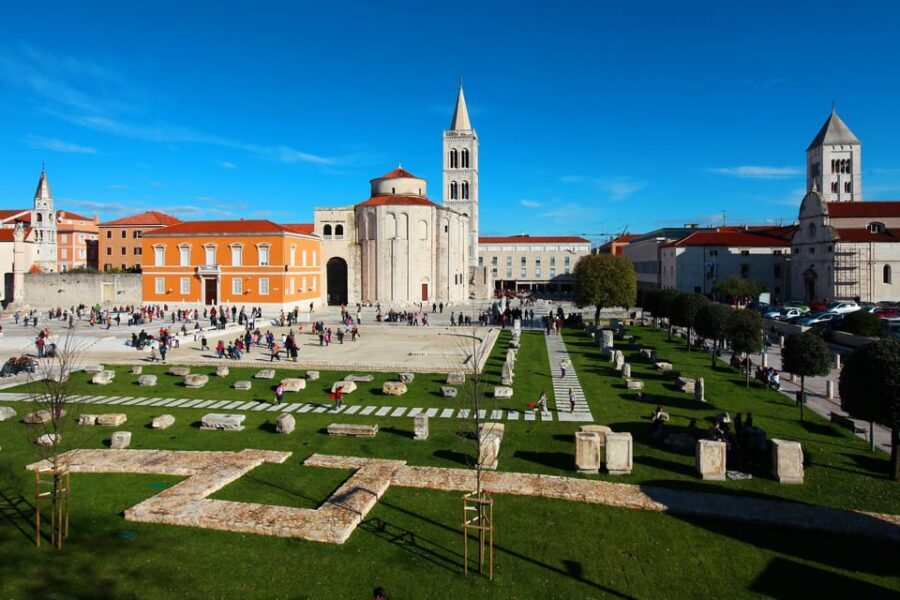
After the cathedral area, the walk moves toward the Roman Forum. This stop is a smart bridge. It helps you see that Zadar didn’t just build churches—earlier civic life shaped how the city was laid out and how it thought about public space.
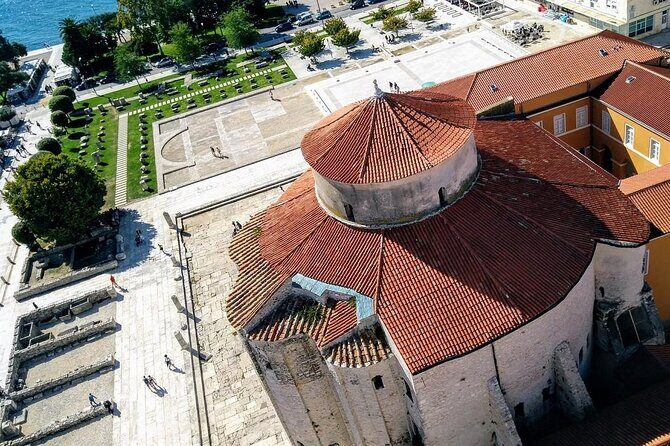
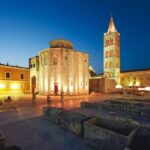
Then you reach the symbol of Zadar: the Church of St. Donatus. Even though the itinerary specifies no entrance here, you still get guided context and sightseeing. The “no entrance” part matters for your expectations: you’re coming for the exterior impact and the story behind the famous form, not a ticketed interior visit.
This is where the tour’s pacing works well. You don’t feel like you’re cramming buildings back-to-back with zero breathing room. Instead, the guide keeps turning each stop into an explanation you can hold onto while you walk to the next square and gate.
Monastery, street segments, and the short walks that add up
You’ll pass by the Benedictine Monastery of St. Mary (no entrance) and then move through street sections like Ulica Perivoj Gospe od zdravlja and Široka ulica. These may feel like “just walking,” but they’re not random connectors.
Think of them as the glue. Monuments make headlines, but streets show the lived scale of a place—how people moved, where sightlines naturally fell, and how different eras overlap in the same blocks. In a city this old, that overlap is the whole point.
There’s also a stop that involves passing by the Sea Gate (Morska vrata) without stopping, plus a pass by Captain’s tower. Those quick passes are easy to miss if you’re moving too fast, so it helps to keep your attention on what the guide is explaining. If you’ve got the kind of curiosity that likes “why is this here,” this part rewards you.
Other walking tours we've reviewed in Zadar




Market Zadar: the tasting stop that makes the tour more memorable
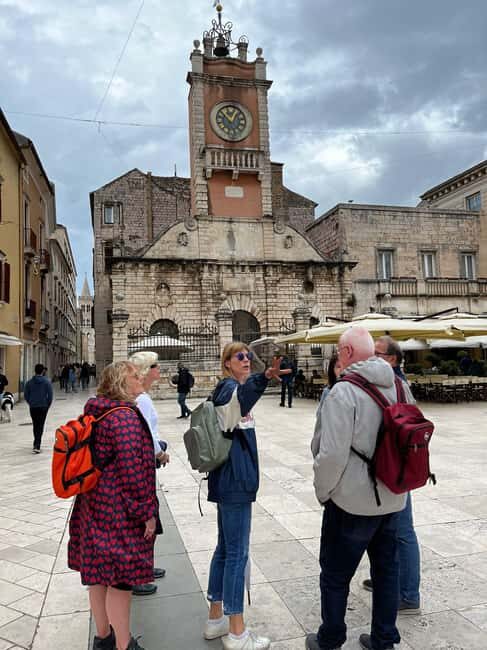
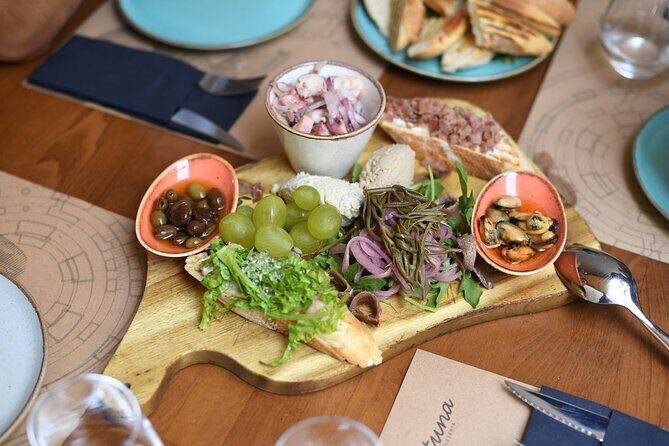
Midway, the tour shifts from architecture to appetite: Market Zadar. This is listed as an aperitif moment with sightseeing, plus a cheese tasting and a visit inside the food market area.
This is one of the reasons I’d recommend doing this on a day you’re hungry for more than photos. A city walk can feel like facts bouncing off the brain. Food helps anchor it. You remember the flavors and the place at the same time.
A key detail: tastings are possible almost every day in high season, but not on national holidays or Sunday afternoons. During low season, the afternoon and Sunday timing can be more limited. So if you’re traveling in the shoulder months and you really want the tasting, plan your timing carefully.
Also, remember this: entrances that charge tickets aren’t included. The market portion is part of the tour flow, but if you choose to do extra paid stops on your own, that’s separate.
People’s Square and the Church of St. Simon: the civic-meets-religious zone
Next is People’s Square, described as a place where everyone meets or passes. Near it is the Church of St. Simon, which you’ll see close by as part of the walk.
This is a great stop for two reasons. First, squares are where you feel the city’s rhythm—where people naturally gather. Second, the tour uses this area to explain how religion and civic life sit side by side in Zadar’s layout.
If you’re tempted to rush because you’ve already seen enough churches, don’t. This part helps you understand why the earlier stops weren’t isolated monuments. They connect back to how Zadar functioned: gatherings, processions, power, and public life all braided together.
Five Wells Square and the Land Gate lion: the finish with power symbols
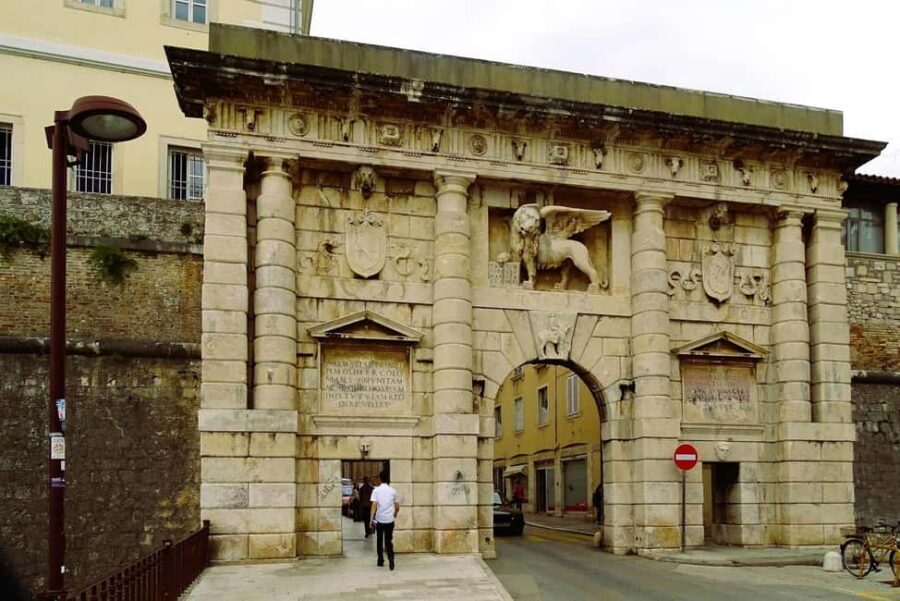
The route continues through the area near Rector’s Palace and brings you to Five Wells Square. Then you head toward the Land Gate (Kopnena vrata), where the winged lion symbol is part of the story of power.
This is a strong way to end, because gates and symbols act like the city’s punctuation mark. After walking through Roman remnants and church landmarks, you arrive at something that feels defensive, official, and unmistakably “you’ve entered Zadar.”
It’s also where the tour becomes easiest to remember later. Five Wells Square gives you a visual anchor; the Land Gate gives you a final image to associate with everything you learned earlier.
Your drop-off options are listed as three locations: Land Gate, Zadar, or Sea Organ. That flexibility can help you plan your next move—whether you want to return toward the waterfront or head back into the central streets.
Price and value: $28 for guidance, context, and optional extras
$28 per person for a 2-hour guided walk is not a bargain in the bargain-hunter sense, but it’s strong value if you actually care about what you’re seeing.
Here’s what you’re paying for:
- A guided route that includes major Zadar touchpoints like Sea Organ and the key church-and-forum cluster.
- Time built for explanation at each major stop.
- Possible extras: a possible free entrance to a medieval church on the way, or tastings (Maraschino/Cheese) depending on season and day.
What’s not included matters too. Paid entrances aren’t covered, and toilet breaks aren’t included. So your “true cost” is really $28 plus anything you decide to pay for on the spot.
If you’re the type who hates tours that rush you and then point silently, this one tends to fit better. The tour is designed for cultural heritage lovers who want the story with facts, not just a route.
Transport and group setup: pickup is simple if you want it
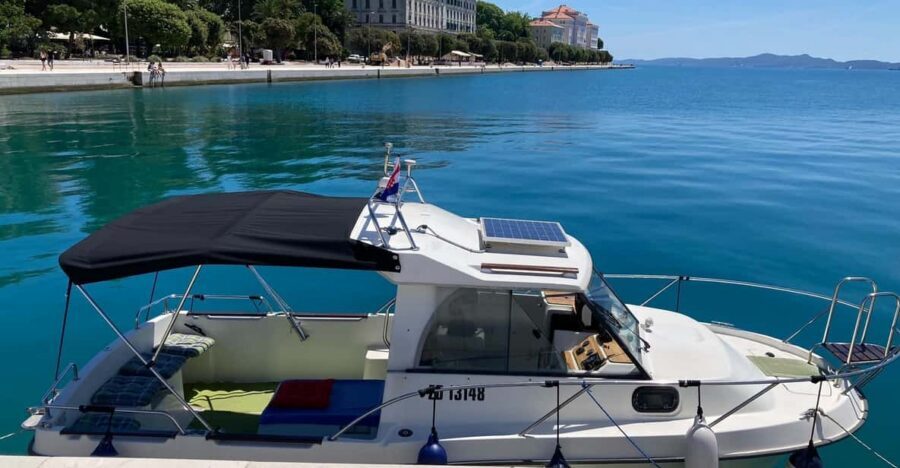
There’s an optional pickup. If you take it, look for a black Peugeot Traveler with white ZADAR CITY TOUR logo on the side doors. The driver has your name on a paper and lets you into the vehicle.
If you’re meeting on foot instead, the meeting point depends on the selected option. That’s normal for city tours, but it does mean you should double-check your confirmation details so you don’t end up at the wrong corner.
You also have language choices: the live guide is available in English, French, Italian, and Croatian. Private groups are available too, which can help if your travel style is less about meeting people and more about moving as a unit.
Who this tour is best for (and who should skip it)
This tour is most suitable if you:
- Love cultural heritage and want story + material details rather than surface-level sightseeing.
- Enjoy walking enough to get between multiple major sights in one go.
- Want a guided orientation to Zadar’s key sites without turning the day into a logistics puzzle.
It’s not suitable for a range of people based on the activity rules. It’s not recommended for travelers with heart problems or other serious medical conditions, and it’s not recommended for mobility issues. It also has a clear age and health filter: children under 13, pregnant women, people over 80, people with respiratory issues, people with a cold, and anyone with recent surgeries.
Rules also exclude pets and mobility scooters, and the experience doesn’t allow audio recording, bikes, walking frames, intoxication, or party groups. If you’re traveling with any of those constraints, check alternatives that match your needs.
Practical tips that make the walk smoother
Wear comfortable shoes. The tour is a city walk with multiple stops, and the included time suggests you’ll be moving continuously rather than waiting around.
Weather matters. You’re advised to check the forecast before booking. The tour notes that you won’t get a refund just because it’s raining and you asked to be refunded.
Also plan your timing around the tasting/entry possibilities. Tastings and possible free medieval church entry are tied to season and day rules (high season is better; national holidays and Sunday afternoons can limit tastings). If you’re hoping for those extras, don’t treat them as guaranteed—treat them as a bonus.
Finally, remember the tour rules: toilet breaks aren’t included. Build in a buffer before you start so you don’t feel rushed mid-walk.
Should you book the Zadar City Tour 120min Walk?
Book it if you want a guided way to understand Zadar’s key landmarks—especially if you care about how modern Zadar connects to Roman and medieval layers. The best part is that you don’t just see sights; you’re walked through why they matter, with Sea Organ and the major church cluster anchoring the story.
Skip it if you need frequent restrooms, have mobility or serious medical concerns, or you want a low-walking, slow-paced outing. Also skip the mindset that this will automatically include every paid entrance—paid admissions aren’t part of the base package.
If your goal is a smart introduction to Zadar that you can actually remember, this walk is an easy yes.
FAQ
How long is the Zadar City Tour 120min Walk?
The tour runs about 2 hours, with a total duration listed as 2 hours to 150 minutes.
Where does the tour start?
The starting point depends on the selected option. For the morning format, it starts at the Greeting to the Sun installation.
Is pickup available?
Pickup is optional. If you book it, you’ll meet a black Peugeot Traveler with a ZADAR CITY TOUR logo, and the driver will have your name.
What languages are the live guides available in?
The live guide is available in English, French, Italian, and Croatian.
Are entrance tickets included?
Entrances to places that charge a ticket are not included. Some listed stops are no-entrance or pass-by, and a medieval church entrance may be possible for free depending on the situation.
Is there tasting during the tour?
An aperitif and cheese tasting are part of the Market Zadar stop, and tastings (including Maraschino/Cheese) are possible almost every day in high season, except on national holidays or Sunday afternoons. In low season, Sunday afternoons and afternoon tastings may not be possible.
Where do you get dropped off at the end?
Drop-off locations are listed as Land Gate, Zadar, and Sea Organ (depending on the option).
Is this tour suitable for kids or older travelers?
The activity rules say it’s not suitable for children under 13, and it’s also not recommended for people over 80.