REVIEW · ZADAR
Zadar City Tour 90min Walk
Book on Viator →Operated by ZADAR CITY TOUR · Bookable on Viator
Zadar’s old stones sing in 90 minutes. This 90-minute city walk is a smart mix of Roman ruins, Venetian-era architecture, and sea-side installations you’ll recognize from photos. I especially like how the route threads major landmarks like People’s Square and the Cathedral of St. Anastasia into one easy loop.
What I like next is the payoff per minute: free outdoor viewing at most stops, plus occasional free tastings or a free church entrance option along the way. The group stays small (up to 15), so you’re not lost in a crowd.
One heads-up: this is still a walking tour with no toilet breaks, and it’s not recommended if you have mobility issues.
In This Review
- Key Highlights in Plain Terms
- Why This 90-Minute Walk Works in Zadar
- Price, Value, and What $26.43 Gets You
- Two Starts, Two Different Routes: 11 AM vs 18:30
- What You’ll See Outside: St. Anastasia, Forum, Donatus, and More
- Cathedral of St. Anastasia (seen from outside)
- The Forum (Roman bones)
- Church of St. Donatus (rotunda style, no entrance)
- Benedictine Monastery of St. Maria (exterior-focused)
- The Romanesque and Venetian “Street-Level Time Machine”
- Stup srama (the Pillar of Shame)
- People’s Square and the Venetian political stage
- Gradska loža (city hall energy)
- Kalelarga and the City’s Gate Lines
- Kalelarga: the long main street over Roman roots
- The New Gate
- Sea Organ and Greeting to the Sun: Modern Zadar on the Waterfront
- Sea Organ (may be excluded on the evening tour)
- Greeting to the Sun (not on the evening tour)
- Five Wells and the Land Gate: The End-Cap View
- What the Guide Actually Adds (And Why It Matters)
- Small-Group Tips So You Get the Most Out of It
- Should You Book the Zadar City Tour 90min Walk?
- FAQ
- How long is the Zadar City Tour 90min Walk?
- What’s included in the tour price?
- Is the tour mostly outside, or do I go inside buildings?
- Does the 11 AM tour include the Land Gate?
- Does the 18:30 PM tour include the Sea Organ?
- How big is the group?
- What should I do if weather is bad?
- Are there toilet breaks or transfers included?
- Best Bet
Key Highlights in Plain Terms
- Small group size (max 15) keeps the pace human and the questions manageable
- Roman to Venetian to modern Zadar in one 90-minute route
- Outdoor viewing with mostly free stops, since several major buildings are seen from the outside
- Two time slots change key sights (Sea Organ vs Land Gate vs Five Wells)
- Possible free tastings or a free medieval church entrance on the route
- Guides like Doria and Danja are known for clear English and strong city storytelling
Why This 90-Minute Walk Works in Zadar
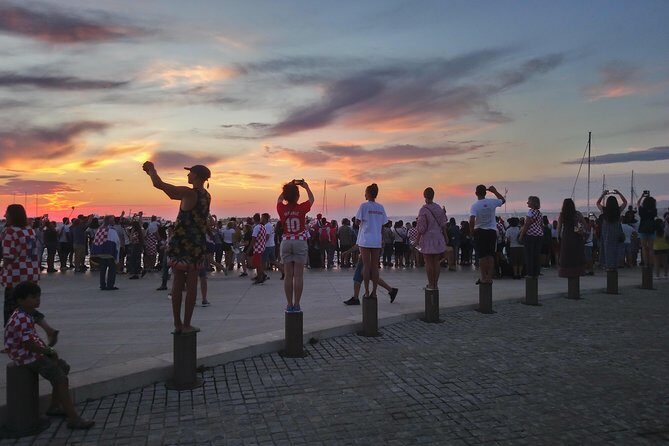
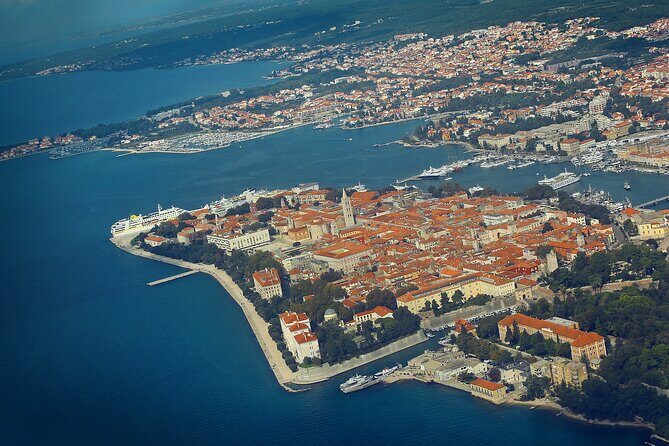
If your time in Zadar is tight, this tour is built for that reality. In about 1 hour 30 minutes, you cover the core of the old town area on foot, without trying to turn it into a museum marathon. You’ll walk past the kind of sights that usually require multiple tickets and multiple bus rides—except here, most of the important stuff is visible from outside.
I like the structure: you don’t just get names and dates. You get context for why Zadar looks the way it does. The city has layers—Roman street lines and forums, Venetian power in buildings and gates, then the modern identity that includes famous sound-and-light installations. Even when you’re simply looking at a square or a church exterior, the guide’s explanation helps it click.
Another practical plus: the tour is small-group and in English. That matters in Zadar because the old streets can feel confusing fast. A guide helps you connect dots you’d otherwise miss—like why certain buildings survive, why some are now desacralized, and how the waterfront installations became part of modern city life.
Other Zadar Old Town walking tours we've reviewed in Zadar


Price, Value, and What $26.43 Gets You
At $26.43 per person for roughly 90 minutes, this is the kind of tour that makes sense if you want efficiency plus local interpretation. You’re not paying for a huge bundle of included entry tickets. Instead, the value comes from:
- A tight route through major landmarks you can otherwise spend hours finding
- Stops that are free to view (several have admission ticket marked free)
- Possible perks like Maraskino/cheese tastings or a possible free entrance to a medieval church
- A guide who answers questions and gives you direction for what to do after the tour
If you love walking and you want to “get your bearings fast” in a compact area, the price feels reasonable. If you’re hoping for lots of included interior visits, you may find the tour more like an informative stroll than a ticket-heavy experience—several churches and monuments are viewed from outside, and entrance is marked as not included for key stops.
Also, with a max of 15 travelers, you’re paying for more personal guidance than you’d get on a bigger bus-style tour.
Two Starts, Two Different Routes: 11 AM vs 18:30
The itinerary changes depending on which time slot you book, and that’s important. Here’s the practical rule:
- The 11 AM tour excludes the Land Gate.
- The 18:30 PM tour excludes the Sea Organs.
- The Five Wells are not included on the morning tour, meaning they’re part of the evening experience.
Meeting-wise, the 18:30 tour starts in English from the big Venice Republic Land Gate (a triumphant-arch style structure). The guide waits in front of the gates by the bikes.
For your decision, think like this:
If you want the signature waterfront audio installation, choose the time that includes the Sea Organ. If you want to end near the city’s gate-and-wall area and also see the Five Wells, choose the later slot.
And no matter which time you pick, expect an old-town walking circuit. This is not a drive-and-view tour.
What You’ll See Outside: St. Anastasia, Forum, Donatus, and More
A big part of the charm here is that you see the city’s icons without waiting in long lines. Many stops are marked as no entrance, so you’re meant to look closely at exteriors, shapes, materials, and what survived through centuries.
Cathedral of St. Anastasia (seen from outside)
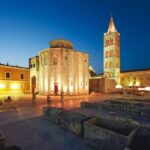
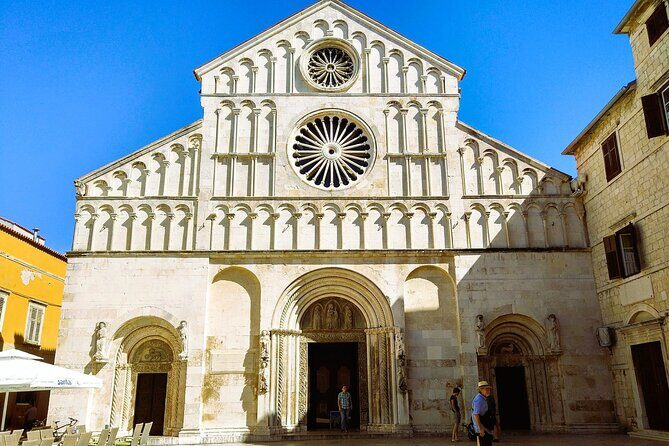
You’ll pass the Cathedral of Saint Anastasia, described as Zadar’s biggest Romanesque church. Entrance is not included here. Still, the cathedral’s presence does its job: it gives you a visual anchor for the medieval heart of the city.
If you want to go inside, you’ll need to plan that separately. The tour’s strength is orientation and interpretation, not making sure you do every interior.
Other walking tours we've reviewed in Zadar






The Forum (Roman bones)
Next comes the Forum, an ancient Roman forum from the 1st century BC. This is the kind of stop where a guide’s explanation matters because you might otherwise look at ruins and wonder what you’re looking at.
Church of St. Donatus (rotunda style, no entrance)
You’ll also pass the Church of St. Donatus, a desacralized 9th-century church built as a huge rotunda with a pre-Romanesque style. Again, entrance isn’t included. The value is in seeing the form and learning what that style suggests about the era.
Benedictine Monastery of St. Maria (exterior-focused)
Later, you pass the Benedictine Monastery of St. Maria, a feminine convent from the 11th century with a Renaissance church. The tour doesn’t include an entrance. Even so, it adds another layer—religious life and architecture evolution—without turning the walk into a multi-ticket day.
The Romanesque and Venetian “Street-Level Time Machine”

One thing I like about this tour is how it moves through history at human walking scale. You’re not hopping between far-flung districts. Instead, you see how Roman lines, medieval meanings, and Venetian administration overlap.
Stup srama (the Pillar of Shame)
There’s a quick stop at Stup srama, one of two large Roman columns that survived as the Pillar of Shame during the Middle Ages. It’s free to view, and it’s the kind of landmark that gives you a jolt: the same stone can carry very different meanings over time.
People’s Square and the Venetian political stage
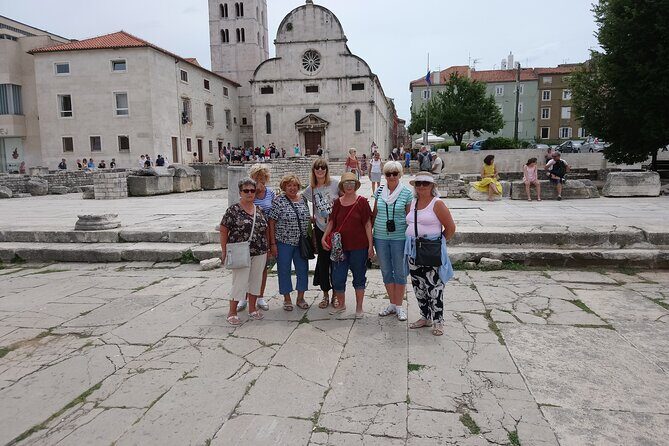
You’ll spend time at Narodni trg (People’s Square), a space everyone passes. It’s surrounded by medieval landmarks including the City Loggia and the City Guard. Then you get a close look at the 16th-century City Guard built during the Venice Republic government.
This part of the walk helps you understand that Zadar’s old center wasn’t just pretty. It was administrative power, civic identity, and public theater.
Gradska loža (city hall energy)
Another Venetian-era stop: Gradska loža, the 16th-century City Hall. Even without interior access, it’s useful to see how city governance “shows itself” in architecture.
Kalelarga and the City’s Gate Lines
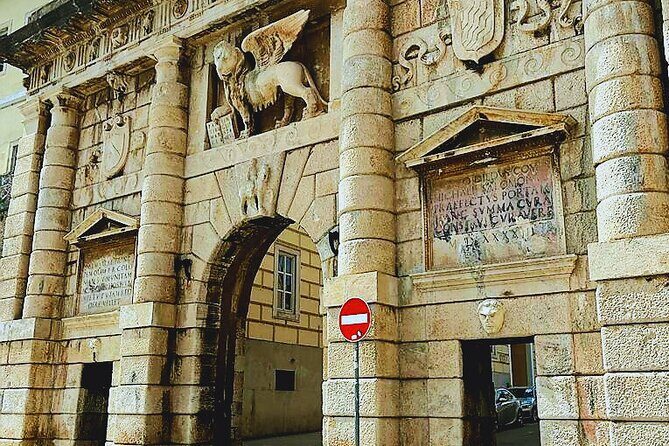
Two highlights for anyone who likes walking with a theme: Kalelarga and the gates.
Kalelarga: the long main street over Roman roots
You’ll pass Kalelarga, described as the biggest street on the peninsula. The big idea is that it used to be the main Roman decumanus. If you’ve ever wondered why some old European streets feel permanently important, this is the answer: the line mattered so much that later powers built their lives along it.
The New Gate
You’ll also see the New Gate visible from People’s Square. It’s noted as the last gate built in 1931. This is a good reminder that the old town isn’t frozen in time—Zadar kept updating its boundaries and access points into the modern era.
Sea Organ and Greeting to the Sun: Modern Zadar on the Waterfront
These are the installations most people recognize from afar, and the catch is timing.
Sea Organ (may be excluded on the evening tour)
The Sea Organ is described as an installation that sings with the help of the sea, placed on the promenade in a piano keyboard shape. It’s one of the most popular public installations since 2005. Admission is free, but it’s explicitly not included on the 18:30 tour.
If you’re booking for the sound-and-water experience, pick the schedule that includes it. If you’re not sure which one that is for your dates, check your confirmation details, because the tour time matters here.
Greeting to the Sun (not on the evening tour)
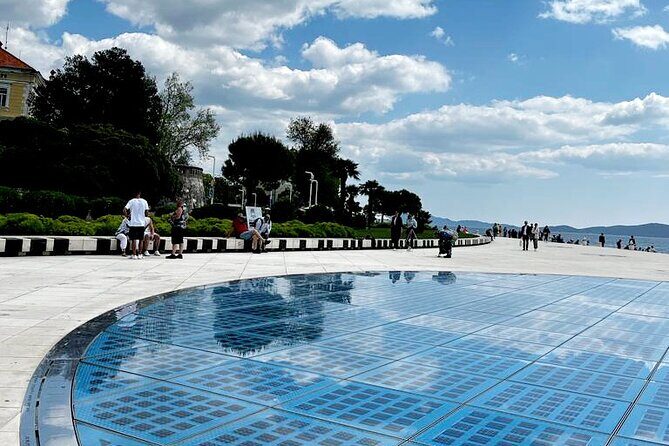
The Greeting to the Sun comes from 2008 and represents the solar system made in solar panels on the floor. It’s free, but it’s marked as not included on the evening tour.
Together, these two installations are a great example of how Zadar blends modern creativity into a place that already has ancient street lines. You get Roman stone, Venetian civic buildings, then a futuristic solar-and-sound promenade.
Five Wells and the Land Gate: The End-Cap View
If you go in the later slot, the Five Wells are included. They’re marked as free and specifically not included on the morning tour. Short stop, but it adds a fun “wait, why is that here?” moment—exactly the kind of detail you miss when you walk on your own.
Then for the 18:30 tour, you also begin at the huge Land City Gates (the Venice Republic Land Gate built like a triumphal arch). The guide waits by the gates beside the bikes, so you get a clear meeting point and an easy visual landmark.
This is also the part of the experience where you can decide how you’ll keep exploring after the walk—because once you understand where the gate and main squares connect, the rest of old Zadar starts to make sense.
What the Guide Actually Adds (And Why It Matters)
The itinerary lists monuments, but the real value is the interpretation. In the examples shared for this tour, guides like Doria and Danja are repeatedly described as strong on English and able to connect Roman times, Venetian influence, and more recent conflicts in Croatia and the region.
That matters because Zadar’s story isn’t only medieval or only Roman. It’s all of it layered together. If you leave knowing just the basic names, you’ll still enjoy the walk. But if you leave with a thread connecting the city’s phases, you’ll recognize what you’re looking at as you wander later.
One more practical point: this tour often fits well even on rough days. There are cases where the tour ran despite heavy rain. You should still dress for weather, since the route is outdoors.
Small-Group Tips So You Get the Most Out of It
Here’s how I’d plan around this tour so it pays off:
- Wear shoes you don’t mind getting a little scuffed. Old town streets can be uneven.
- Bring a light layer. The experience is mostly outdoors and weather can change quickly.
- If you care about interiors, treat this tour as a map and meaning first. Plan follow-up visits separately for places where entrance isn’t included.
- If you booked the later tour for the waterfront, double-check whether Sea Organ is part of your time slot, since it’s excluded on 18:30.
And if the guide offers the chance for free tastings (Maraskino and cheese are specifically mentioned), take it. Those stops tend to be short, and they help you connect the city you just learned about with something you can actually taste.
Should You Book the Zadar City Tour 90min Walk?
Yes—if you want a focused first pass through Zadar’s old core. This tour is a good fit when you have limited time, you like guided walking, and you want context that turns landmarks into a story. The small group size and the high satisfaction score (with a strong 4.9 rating) are consistent with that goal.
It’s also a smart booking when you like mixing eras: Roman remains, Venetian civic power, and modern sea installations are all part of the experience, and most major stops are free to view from the outside.
Skip it—or at least reconsider the time slot—if you need lots of interior access, or if you can’t handle a real walking route with no toilet breaks. If your mobility is limited, this one may be frustrating.
If you’re trying to choose between 11 AM and 18:30, use the sight trade-offs: Sea Organ is excluded on the evening tour, while the Five Wells are not on the morning tour, and the Land Gate is tied to the 18:30 start.
FAQ
How long is the Zadar City Tour 90min Walk?
It runs about 1 hour 30 minutes.
What’s included in the tour price?
You get the guided walking experience in English, plus free outdoor viewing at most stops. There may also be possible free entrance to a medieval church or Maraskino/cheese tastings on the way.
Is the tour mostly outside, or do I go inside buildings?
Several major sights are marked no entrance (including the Cathedral of St. Anastasia, Church of St. Donatus, and the Benedictine Monastery of St. Maria). The tour focuses on viewing and learning, not lots of included interior tickets.
Does the 11 AM tour include the Land Gate?
No. The 11 AM tour excludes the Land Gate.
Does the 18:30 PM tour include the Sea Organ?
No. The 18:30 PM tour excludes the Sea Organs.
How big is the group?
The tour has a maximum of 15 travelers.
What should I do if weather is bad?
The experience requires good weather. If it’s canceled due to poor weather, you’ll be offered a different date or a full refund.
Are there toilet breaks or transfers included?
No—toilet breaks and transfer service are not included.
Best Bet
Pick the time slot based on what you most want to see: the Sea Organ for the morning route, the Land Gate + Five Wells for the evening route. If that lines up with your priorities, this is a strong way to understand Zadar fast without ticket headaches.