REVIEW · ZADAR
Zadar: Evening Walking Tour of the Old Town
Book on GetYourGuide →Operated by Dubrovnik Local Guide · Bookable on GetYourGuide
Zadar’s Sea Organ makes the night feel alive. This evening Old Town walking tour strings together Zadar’s top sights in about 70 minutes, including Kalelarga and the peninsula’s monuments. I like the way the tour connects big landmarks with story details, and I love that you get the Sea Organ experience near the water. The only real drawback is the pace: with just one hour, you move on quickly and won’t have time to linger long at every stop.
You start on the peninsula, where the Old Town sits inside a ring of city walls and green spaces, with cafés and museums nearby. The route keeps things efficient: you’ll hit the main squares and churches without getting lost or spending the evening crossing town.
A good part of the value is the guide. Names like Jasmina, Marija, and Marina come up with strong praise for engaging storytelling and clear English, and that matters here because Zadar’s layers of history can feel like trivia unless someone ties them together for you.
In This Review
- Quick Hits You Should Know Before You Go
- Entering Zadar’s Old Town on Foot (and Why Timing Matters)
- Trg Pet Bunara to Five Wells Square: The Start That Sets the Tone
- Kalelarga Street: Zadar’s Main Stage
- Forum and the Main Squares: How Zadar’s Layers Show Up in Plain Sight
- St. Donatus Church and St. Anastasia Cathedral: Two Stops, Two Ways to Read the City
- The Sea Organ by Nikola Bašić: The Night’s Main Event
- Sunset, Venetian Walls, and the Value of a Late Walk
- Price and What You’re Really Paying For ($28 for 70 Minutes)
- Who This Tour Fits Best (and Who Might Want Something Else)
- Final Verdict: Book It or Skip It?
- FAQ
- Is this an evening walking tour?
- How long is the tour?
- How much does it cost?
- Where is the meeting point?
- What language is the tour guide?
- What’s included in the price?
- Which major sights are covered?
- What is special about the Sea Organ?
- Can you swim near the Sea Organ?
- Is it possible to cancel for a refund or pay later?
Quick Hits You Should Know Before You Go
- Meet at Trg Pet Bunara for an easy start right in the Old Town core
- Kalelarga first-class people-watching, plus key context for what you’re seeing
- Five Wells Square and the main squares give you the framework to understand the city
- St. Donatus Church and St. Anastasia Cathedral are more than photos when a guide explains them
- Nikola Bašić Sea Organ produces sound from the sea, not a speaker system
- A late walk can line up with sunset for extra atmosphere by the promenade
Entering Zadar’s Old Town on Foot (and Why Timing Matters)
This is a compact, evening-focused way to see Zadar’s Old Town without turning your trip into a scavenger hunt. Because the tour is about 70 minutes, you get a structured path through the highlights, then you’re free to keep exploring afterward at your own pace.
What I like is that the tour doesn’t treat Zadar as just a set of buildings. It builds a sense of place: the Old Town peninsula, the city walls, the central monuments, and the lively restaurant and café scene that surrounds the sights. If you’re in town for a day or two, this kind of “map in motion” helps you spend the rest of your time with more confidence.
The main consideration is also simple: it’s not a slow stroll with long stops. You’ll see a lot, but you’ll need to choose what you want to return to once the guided part ends.
Other Zadar Old Town walking tours we've reviewed in Zadar


Trg Pet Bunara to Five Wells Square: The Start That Sets the Tone
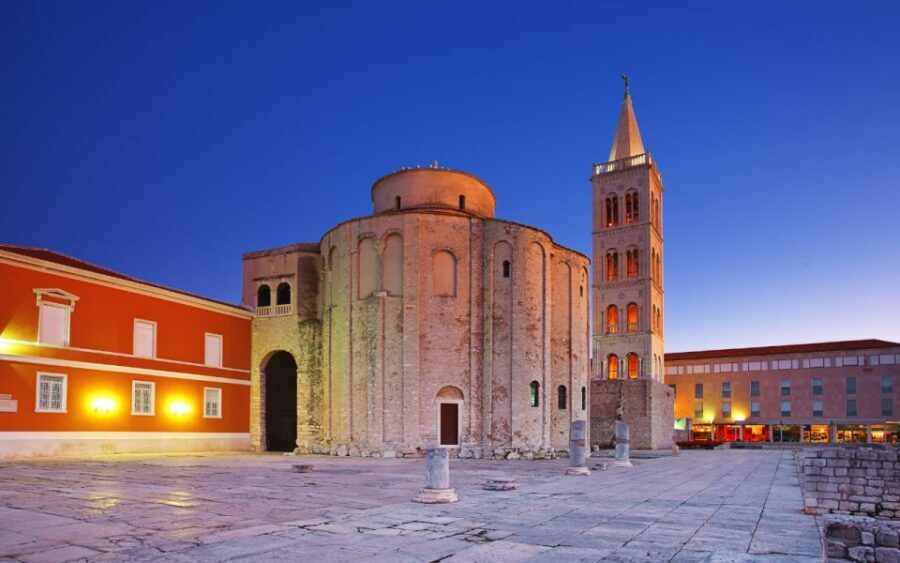
Your meeting point is Trg Pet Bunara (Pet Bunara Square), and the tour begins with an intro that helps you read the city. That kind of primer sounds basic until you’re standing in front of big landmarks and realizing you’d otherwise miss the connections.
From there, you head through the Old Town’s key public spaces, including Five Wells Square. This matters because Zadar’s best views and photo angles aren’t random. Squares and open areas are where the city’s story comes into focus, especially in the evening when the streets feel less like “routes” and more like “rooms.”
If you want the best experience, arrive a few minutes early so you can settle in. When a group starts on time, the pacing stays smooth and you don’t lose daylight (or night) to delays.
Kalelarga Street: Zadar’s Main Stage

Kalelarga is the kind of street you can understand even without a lecture. It’s one of the most popular stretches in town, lined with the daily rhythm of Zadar—people walking, shopping, grabbing a drink, and generally doing the thing you came for.
On this tour, Kalelarga isn’t just a walk-through. The guide connects what you see to the city’s layout and historic layers, so the street feels like a living timeline rather than a straight line from point A to point B. You’ll also get context for the nearby landmark cluster, including squares and important civic areas.
The practical benefit: when you later come back on your own, you’ll know where you are without checking your phone every five minutes. That’s a small thing that pays off in real time.
Forum and the Main Squares: How Zadar’s Layers Show Up in Plain Sight
The tour covers the Old Town main sights, including the Forum and People’s Square. These spaces matter because they’re where the city’s public life used to happen and where it still happens now, just with a modern twist.
In an hour-long tour, the guide’s job is to help you spot the “why” behind the “what.” Even if you don’t go into every building, the stories tied to these areas make it easier to understand Zadar’s peninsula layout—why key structures sit where they do and how the city’s identity evolved over time.
If you’re the type who likes to connect architecture to history, this section is a strong match. If you’re more interested in atmosphere and photos, you’ll still get value because squares are where the best evening energy lives.
St. Donatus Church and St. Anastasia Cathedral: Two Stops, Two Ways to Read the City
Two major religious landmarks come up on the route: St. Donatus Church and St. Anastasia’s Cathedral. These are the kinds of places where a guide changes the experience. Without context, you may only see stone and height. With context, you start recognizing style cues, historical significance, and how they fit into the city’s story.
A good thing about this tour is that it doesn’t overload you with stops that feel like detours. You’re moving between nearby highlights, so the churches don’t feel like an extra chore layered onto your evening plans.
One consideration: if you were hoping for a long interior visit or a deep architectural lesson, this tour won’t fully replace a longer sightseeing day. It’s designed to give you the framework, then let you decide what to explore next.
Other walking tours we've reviewed in Zadar





The Sea Organ by Nikola Bašić: The Night’s Main Event
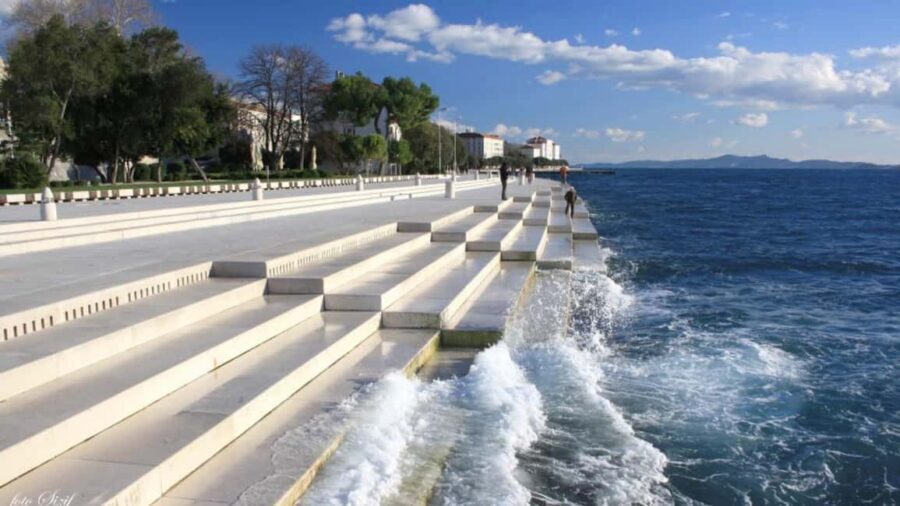
If you’re choosing this tour for one reason, it should be the Sea Organ. Designed by local architect Nikola Bašić, it’s built into perforated stone stairs descending into the sea. Instead of playing music from speakers, it uses a system of pipes and whistles that produce sound when sea movement pushes air through the mechanism.
That detail is exactly why it feels special. The sound isn’t constant background noise—it’s influenced by the tide and by passing boats or ferries, with the effect described as hypnotic. The result is mellifluous tones that can grow in volume as traffic moves through the area.
This is also where the tour’s “evening” focus pays off. The promenade setting makes the Sea Organ experience feel like a nighttime ritual rather than a daytime roadside stop.
Practical tip from the tour description: you can swim from the steps off the promenade while listening to the sound. If that’s on your agenda, go in with swimwear ready, and be mindful that your time on the stairs is still part of the group flow.
Sunset, Venetian Walls, and the Value of a Late Walk
Some nights work out better than others for atmosphere, and a late tour timing can help you catch the sunset look near the waterfront. One reason this route gets remembered is that it can also pass areas connected to Venetian walls and the surrounding historic streets, so you get that old-world edge while still moving efficiently.
Even if sunset isn’t picture-perfect, you still get the key payoff: a structured walk that funnels you to the Sea Organ at a time when the waterfront energy feels right.
Price and What You’re Really Paying For ($28 for 70 Minutes)
At $28 per person for about 70 minutes, you’re paying for three things: a guided path through the top Old Town landmarks, interpretation that helps you understand what you’re seeing, and access to the city’s evening highlight in a way that’s hard to recreate solo without knowing the details.
If you tried to do this on your own, you could walk from square to square. But you’d likely miss the “why it matters” pieces—especially around the churches and the Sea Organ design. In other words, the cost buys time plus context.
For short trips, this kind of guided evening tour often offers better value than stretching your day with individual stops that take longer to plan than to see.
Who This Tour Fits Best (and Who Might Want Something Else)
This works especially well if:
- You’re visiting Zadar for the first time and want a clean route through the main Old Town sights
- You care about stories behind landmarks, not just photos
- You want the Sea Organ experience without spending hours figuring out timing and sequencing
- Your schedule is tight and you still want the evening promenade moment
You might want to look at a longer option if:
- You want lots of time inside churches or museums
- You prefer slow pacing with frequent breaks and extended stops
Final Verdict: Book It or Skip It?
I’d book this walking tour if you want a focused introduction to Zadar’s Old Town that ends with the city’s most original sound installation. The combination of Kalelarga, the main squares, St. Donatus Church, St. Anastasia’s Cathedral, and especially the Sea Organ makes it a smart use of one evening.
Skip it only if you already know exactly what you want to do and you’d rather build your own route without a guide. Otherwise, for the time and the list of high-impact sights, it’s a straightforward, high-value way to understand Zadar while still leaving you energy to keep exploring afterward.
FAQ
Is this an evening walking tour?
Yes. It’s described as an evening walking tour of Zadar’s Old Town.
How long is the tour?
The tour runs for about 70 minutes (listed as 1 hour).
How much does it cost?
The price is $28 per person.
Where is the meeting point?
Meet at Trg Pet Bunara (Pet Bunara Square) in Zadar.
What language is the tour guide?
The tour is guided in English.
What’s included in the price?
It includes a 70-minute walking tour with a live tour guide.
Which major sights are covered?
The tour covers key Old Town sights including Forum, Five Wells Square, Kalelarga, People’s Square, St. Donatus Church, St. Anastasia’s Cathedral, Sea Organ, and more.
What is special about the Sea Organ?
It was designed by Nikola Bašić and uses a system of pipes and whistles in perforated stone stairs that produce tones as the sea moves air through the mechanism. The sound can be affected by boats or ferries passing by.
Can you swim near the Sea Organ?
The tour information notes that you can swim from the steps off the promenade while listening to the Sea Organ.
Is it possible to cancel for a refund or pay later?
Free cancellation is available up to 24 hours in advance for a full refund. You can also reserve and pay later.