REVIEW · ZADAR
WALKING TOUR ZADAR: Top rated guide, Tastings, Private tour
Book on Viator →Operated by Magic Croatia: Trips and Tours · Bookable on Viator
Zadar has a way of grabbing you fast. This private walking tour helps you tick off the big sights of the old center while your licensed guide explains how the city’s Roman, Venetian, and medieval layers connect. You’ll also stop at Zadar’s modern icons, like the Sea Organ and the Greeting to the Sun, so it feels like one continuous story.
I love two parts most. First, you get a true private group experience, which makes it easier to match the pace to your crew and ask questions as you go. Second, the included Maraschino tasting adds a quick, memorable taste of local tradition without turning the tour into a long food detour.
The main drawback to consider is admissions clarity. Some church stops note tickets as not included, so you may need extra money/time if you want to go inside all the religious sites the route passes or pauses for.
In This Review
- What You’ll Actually Do in This 2-Hour Private Zadar Walk
- Private Guide Value: Paying for a Smarter Pace (Not Just a Name Tag)
- Maraschino Tasting: A Small Stop With Big Personality
- The Meeting Point and How the Tour Flows
- Stop-by-Stop: What Each Zadar Moment Teaches You
- The Forum: Zadar’s Roman Grid and Social Square (Free)
- Church of St. Donatus: A Famous Chapel Story, Seen From the Outside
- Cathedral of St. Anastasia: Dalmatia’s Biggest Cathedral (Not Included)
- Greeting to the Sun: A 2005 Attraction With Real Meaning (Free)
- Sea Organ: The Sound of the Adriatic (Free)
- Narodni trg (People’s Square): The Public-Life Heart
- St. Simon’s Church: Silver Relics and Patron-Sentiment
- Five Wells: Venetian Water Cisterns and UNESCO-Listed Walls (Free)
- What Makes This Tour Feel Better Than a Quick Checklist
- Timing Tips for Cruise Days and Short Stays
- Price: Is $295.01 Per Group Good Value?
- Practical Notes So You’re Not Caught Off Guard
- Should You Book This Private Zadar Walk?
- FAQ
- How long is the Zadar walking tour?
- What is the price and group size?
- Is this tour private?
- What language is the tour offered in?
- What’s included in the tour?
- Is pickup and drop-off included?
- Where do we meet the guide?
- Which stops have admissions included or not included?
- What happens if the weather is bad?
What You’ll Actually Do in This 2-Hour Private Zadar Walk
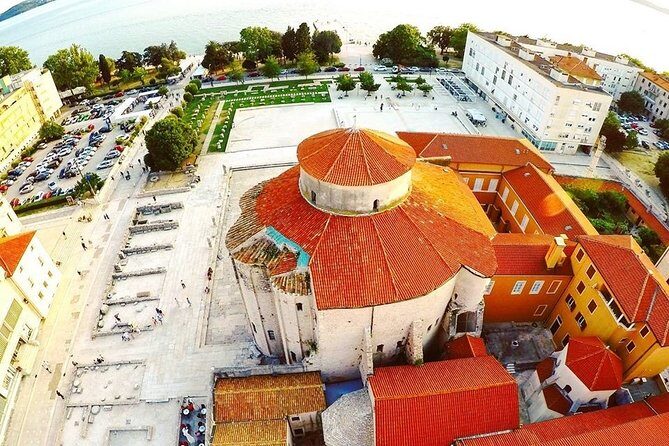
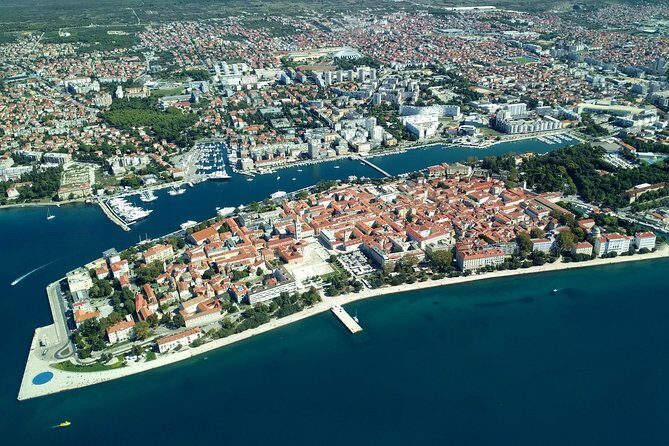
This is an approx. 2-hour stroll through Zadar’s historical center with a licensed local guide. The tour is priced per group (up to 15 people), and it’s offered in English. It’s designed for people who want a high-hit overview of key landmarks without feeling shuffled along with strangers.
Your itinerary works as a loop through the most recognizable squares and monuments, then heads to the waterfront icons. Along the way, your guide ties the sights to the city’s changing power over time, including stories that go beyond postcard descriptions.
If you’re on a cruise, you’ll appreciate the flexibility: the start time can be adjusted to suit your schedule. That matters in Zadar, where timing can make or break whether you get a full visit.
Private Guide Value: Paying for a Smarter Pace (Not Just a Name Tag)
At $295.01 per group (up to 15), this tour can feel like a straightforward “sightseeing fee,” but the value is really in the format.
A private walking tour means:
- Your guide is working only for your group, not juggling multiple languages and attention needs.
- You can ask follow-ups on the spot, especially during the church and fortress-related stops.
- If your group includes different ages or walkers who move at different speeds, you can usually keep everyone comfortable.
From the guide names shared in past tour experiences, you may be matched with top guides like Lucija, Lea, or Ivana. Even when the route is set, those guides stand out for how they shape the walk around your pace and interests, instead of reading a script.
Other Zadar Old Town walking tours we've reviewed in Zadar


Maraschino Tasting: A Small Stop With Big Personality
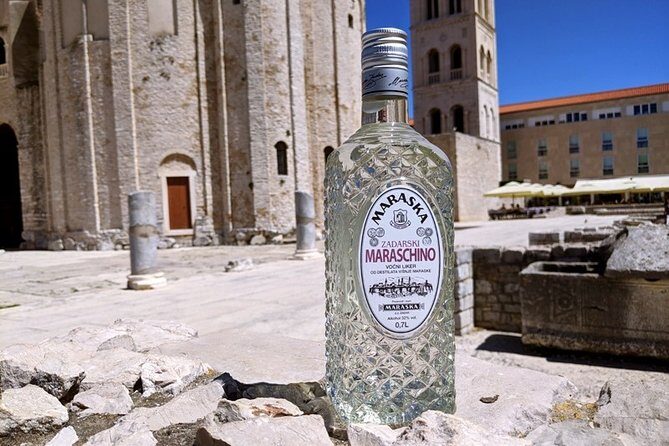
The included tasting is Maraschino, a fruit liquor known for a distinctive aroma. It’s the kind of “only in the moment” experience that makes a short tour feel personal.
Maraschino also works well because it’s not a whole production. You get the tasting as part of the route, then you move on. That’s ideal when you only have a limited window in Zadar and don’t want to lose sightseeing time to a long break.
If you like trying local drinks in a low-stress way, this is one of the best value-adds on the itinerary.
The Meeting Point and How the Tour Flows
You’ll meet at Poljana Pape Aleksandra III 7, 23000 Zadar. The tour ends back at the meeting point, so you’re not forced into complicated transport plans.
It’s also set up for convenience:
- You’ll receive a mobile ticket
- There’s no pickup or drop-off included
- Service animals are allowed
- It’s near public transportation
Practically, this means you should plan on arriving a few minutes early, especially if you’re connecting from a cruise shuttle or a bus stop. One past group noted they were running late, and the guide was accommodating, but arriving early is still your best move.
Stop-by-Stop: What Each Zadar Moment Teaches You
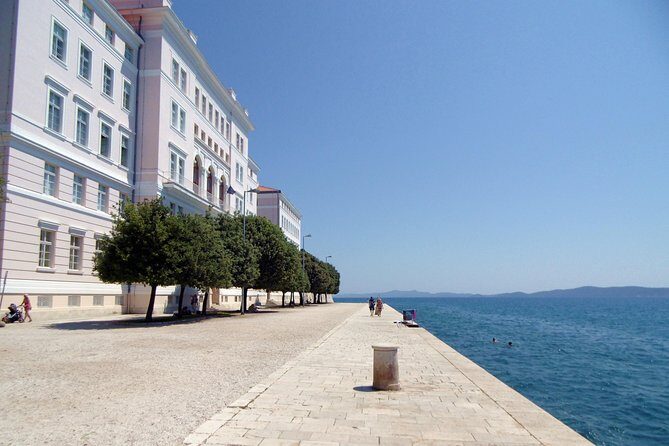
This tour covers the historical center in a logical sweep: Roman beginnings, major churches, waterfront modern icons, then the squares and defensive-water engineering that shaped daily life.
The Forum: Zadar’s Roman Grid and Social Square (Free)
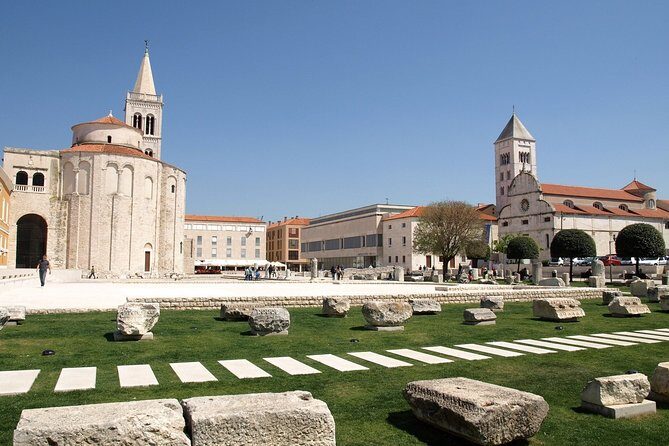
Your walk starts at The Forum, which is the kind of place where you can feel the layers under your feet. Roman Zadar became a colony, and the city’s regular grid of streets and squares formed. Back then, the Forum was a main square and a center of social life.
If you’ve ever wondered why old towns feel “planned” even when they look chaotic, this stop gives the reason. You’ll get the basics of how Roman city design still influences how Zadar is laid out today.
Admission is free for this stop, and the time here is about 15 minutes.
Other private boat and tours we've reviewed in Zadar




Church of St. Donatus: A Famous Chapel Story, Seen From the Outside
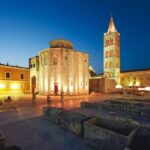
Next is the Church of St. Donatus, one of Zadar’s most recognizable landmarks. Built in the 9th century as a private chapel for bishop Donat, it’s the kind of building that looks important even before your guide explains why.
Here’s a key point: you pass by without stopping. The stop is about 10 minutes, and admissions are not included. So if you want inside access, you’ll need to plan that separately.
This is still a strong moment, though. It gives you context before the tour shifts into Zadar’s biggest cathedral and the waterfront attractions.
Cathedral of St. Anastasia: Dalmatia’s Biggest Cathedral (Not Included)
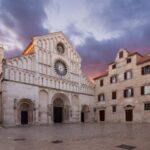
Then comes the Cathedral of St. Anastasia, described as the biggest cathedral in the Dalmatia region. Your guide connects you to the life of St. Anastasia and the Romanesque style of the cathedral.
This is a stop where your experience may depend on what you choose to do with tickets. The tour’s timing is about 15 minutes, and admissions are not included. If you’re the type who likes to walk in and soak up church details, factor in extra time.
Even if you don’t enter, you’ll still get why this cathedral matters in Zadar’s religious story.
Greeting to the Sun: A 2005 Attraction With Real Meaning (Free)
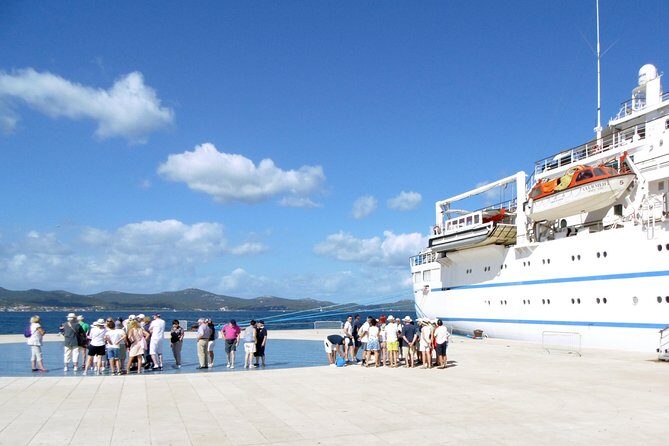
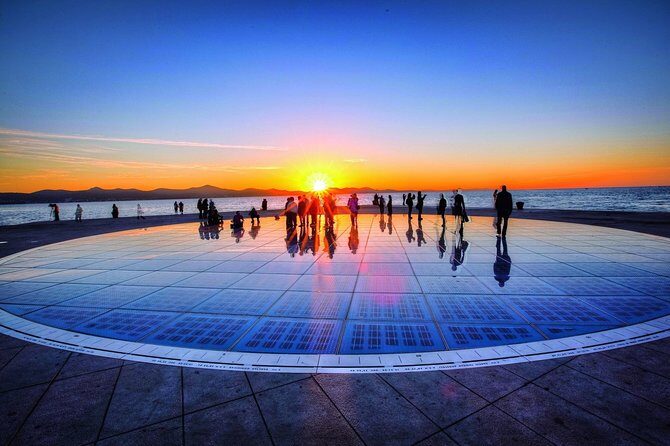
The route moves toward the peninsula end for Greeting to the Sun. This world-famous attraction was built in 2005, which makes it a neat contrast after Roman and medieval stops. Your guide shares interesting, lesser-known facts here—one of those parts of Zadar that feels modern but still fits the city’s long habit of turning public space into something memorable.
Admission is free here, and the stop is about 10 minutes.
Sea Organ: The Sound of the Adriatic (Free)
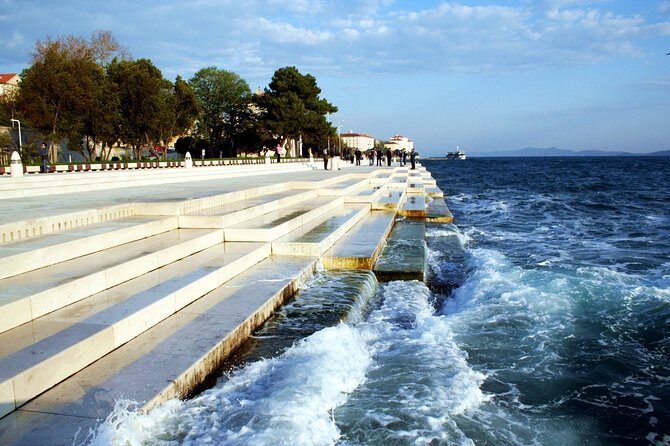
Next is Sea Organ, one of a kind in the world. It looks like stairs descending into the sea, but the key idea is the sound: you’ll hear the unique melody created by the sea itself.
This is where the tour shifts from “looking at history” to “experiencing Zadar.” It’s short—about 5 minutes—but it’s one of the strongest payoffs on the waterfront side of the city.
Admission is free, and it’s exactly the kind of place where a guide’s explanation makes you notice more than you would on your own.
Narodni trg (People’s Square): The Public-Life Heart
Back inland, you’ll reach Narodni trg, the center of public life in Zadar. Your guide points out City Loggia, the City Guard with its clock tower, and Kalelarga, known as the Wide Street and one of Zadar’s most famous streets.
This stop is about 15 minutes and free, and it functions like the tour’s social map. If you want to understand where locals gather, where the city’s pace is felt, and where you’ll probably want to wander after the tour ends, this is the moment to anchor that.
St. Simon’s Church: Silver Relics and Patron-Sentiment
You then visit St. Simon’s Church (St. Simeon’s), which began as an Early Christian basilica built in the 5th century. Inside, you’ll find a silver chest holding relics of St. Simon, the city’s patron saint.
Your guide explains both the story of St. Simon and why the silver chest matters as a work of goldsmithing. This is a stop that often feels more emotional than architectural, because patron saints and relics connect the building to community identity.
Admission is listed as free, and time is about 15 minutes.
Five Wells: Venetian Water Cisterns and UNESCO-Listed Walls (Free)
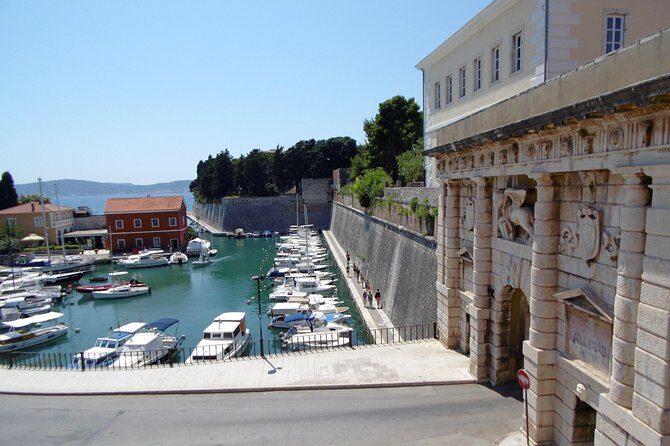
Finally, the tour reaches Five Wells, a water cistern built by Venetians. This stop is also tied to Zadar’s defensive walls, which are part of UNESCO’s World Heritage listing.
The main takeaway is simple: cities don’t survive on monuments alone. They survive on systems—water storage, defense, and daily infrastructure. Five Wells helps you see Zadar as a working place, not just a museum.
The stop runs about 15 minutes and is free.
What Makes This Tour Feel Better Than a Quick Checklist
The itinerary covers top sights, yes, but what makes it worth your time is the interpretation. Past guide-led experiences highlight how guides connect architecture changes to who ruled the city, not just what you’re looking at. That kind of explanation turns landmarks into clues.
You also get practical “read the city” context. One guided walk included pointers like how Zadar’s waterfront area relates to local life, plus small-but-meaningful details such as war-era traces you might otherwise miss, including grenade marks on walkways. Even when those details aren’t the whole story, they change how you see the streets.
And because the group is private, you can slow down for the parts that grab you. That’s the difference between snapping photos and actually understanding what you’re seeing.
Timing Tips for Cruise Days and Short Stays
The tour is approx. 2 hours, so it’s built for people who don’t have a full day. The flexible start time is especially useful if you’re working around cruise ship departure pressures.
My advice:
- If you’re docking by cruise, pick a start time early enough that you won’t feel rushed at the end.
- Bring a small umbrella or a light layer. Weather can matter, and this experience requires good weather.
The tour also uses a mobile ticket. That’s handy, but still plan on having your phone charged.
Price: Is $295.01 Per Group Good Value?
Let’s look at it realistically. This is $295.01 per group (up to 15) for about 2 hours with a licensed local guide in English (and other language options are listed). For a family or a small group, that can be cost-effective compared to paying for multiple separate tickets or paying for rushed self-guided time with no context.
The value comes from three things you can’t easily replicate on your own:
- A guided explanation that connects Roman, medieval, and Venetian elements across the route
- The included Maraschino tasting
- A private format that keeps attention on your group
The only part that can create surprise is admissions at certain church stops. Tickets for St. Donatus and St. Anastasia are listed as not included, so if you plan to enter those sites, budget a little extra.
If you’re traveling solo, the per-group price might still feel steep, but you’re paying for personalization and speed to get the key Zadar hits without guesswork.
Practical Notes So You’re Not Caught Off Guard
A few things to keep in mind as you plan:
- Pickup and drop-off are not included, so you’ll need to get to the meeting point yourself.
- The tour ends where it starts, which is convenient.
- Admissions vary by stop; some are free while others are not included.
- Good weather is required, and the tour may be rescheduled or refunded if canceled due to poor weather.
Also, since Sea Organ and waterfront areas can be breezy and change in comfort quickly, it’s smart to dress for a range of conditions.
Should You Book This Private Zadar Walk?
Book it if you want a short, high-impact introduction to Zadar that mixes Roman-era structure, major churches, and two of the city’s most famous modern waterfront features. It’s especially worth it if you’ll appreciate a guide who can explain how the city changed over time and what you’re looking at when the architecture shifts.
Skip or rethink it if you strongly need admissions included for every church stop. With St. Donatus and St. Anastasia marked as not included, you’ll need to plan for separate entry costs if you want the full interior experience.
Overall, this is a solid choice for first-time visitors who like getting oriented fast, then using that knowledge for your next wandering hour in Zadar.
FAQ
How long is the Zadar walking tour?
The tour lasts about 2 hours.
What is the price and group size?
It costs $295.01 per group, and the group size can be up to 15 people.
Is this tour private?
Yes. It’s a private tour, so only your group participates.
What language is the tour offered in?
The tour is offered in English.
What’s included in the tour?
A licensed local guide, the private walking tour format, a Maraschino fruit liquor tasting, and flexible start time to match your schedule.
Is pickup and drop-off included?
No. Pickup and drop-off are not included.
Where do we meet the guide?
You meet at Poljana Pape Aleksandra III 7, 23000 Zadar, Croatia.
Which stops have admissions included or not included?
The itinerary lists some stops with admission as free and others as not included (for example, St. Donatus and the Cathedral of St. Anastasia are marked as not included).
What happens if the weather is bad?
This experience requires good weather. If it’s canceled due to poor weather, you’ll be offered a different date or a full refund.